What the 1500W peak pulse rating means for your protection budget
The 1.5KE16CA: For a 24V automotive load-dump or an industrial 24V supply surge, this part sits between the rail and ground and shunts the overvoltage before it reaches the downstream converter or controller.
Clamping voltage and breakdown — the real protection window
Reverse standoff is 13.6V typical — this is the DC bias the line sees under normal operation; the diode is effectively open below this. Breakdown voltage starts at 15.2V minimum, meaning the device begins conducting when the transient pushes the rail past that threshold. The gap between 15.2V and 22.5V is the clamping region; a downstream regulator with a 25V abs-max input rating has margin here.
Bidirectional — one part covers both polarities
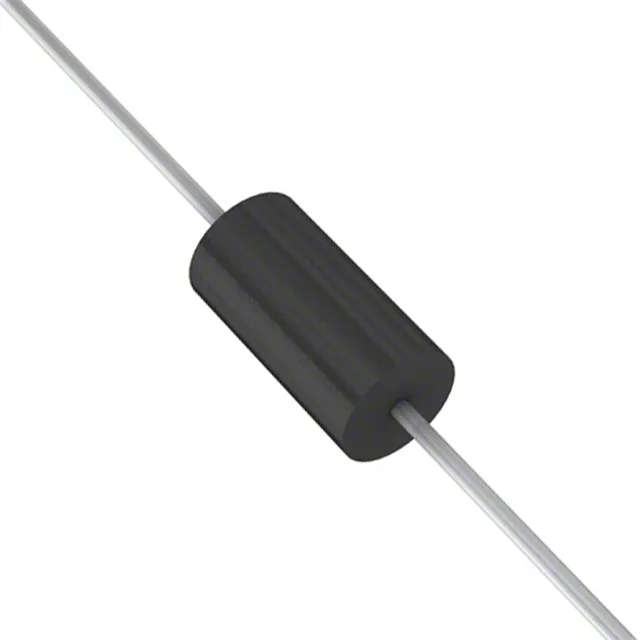
With a single bidirectional channel, the 1.5KE16CA clamps positive and negative transients symmetrically. This matters on AC signal lines, data pairs, or any rail where the surge polarity is unknown — you place one device instead of two back-to-back Zeners. The DO-201AA axial package (also known as DO-27) is through-hole, so it suits point-to-point wiring on terminal blocks or PCB edge protection where a surface-mount part would be harder to replace in the field.
In an outdoor telecom enclosure or an engine-bay ECU that sees 105°C ambient, the 175°C TJ(max) means the device does not derate prematurely. The 1500W peak pulse power is specified at 25°C; derate above that per the datasheet curve, but the wide junction range gives headroom for repetitive transients in hot environments.