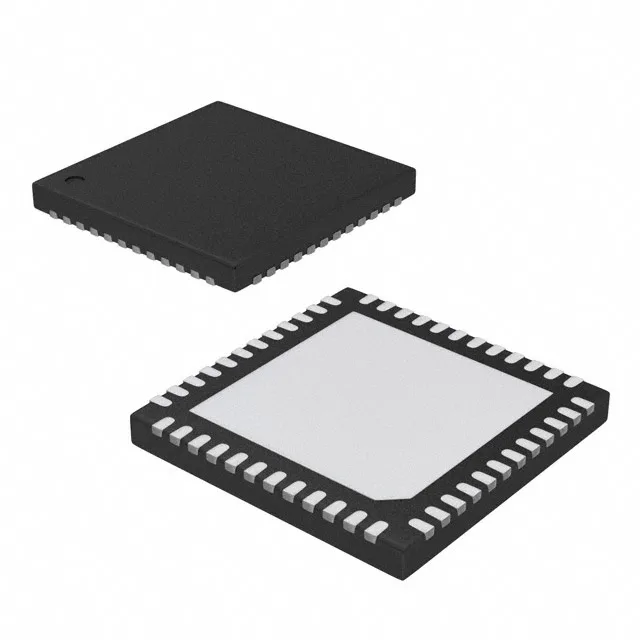
Lattice Semiconductor Corporation LCMXO2-640HC-4SG48C — FPGA / CPLD & Programmable Logic

LCMXO2-640HC-4SG48C Lattice MachXO2 FPGA, 640 LEs, 40 I/O

MPNLCMXO2-640HC-4SG48C
Active

Lattice Semiconductor MachXO2 FPGA, LCMXO2-640HC-4SG48C, 640 logic cells, 40 I/O, 18 Kbit RAM, 2.375-3.465 V, 48-VFQFN Exposed Pad, Tray, 0°C to 85°C.

$6.4500Ref. price · indicative, final on quote
Packaging48-VFQFN Exposed Pad
RoHSROHS3 Compliant
SeriesMachXO2
Independent supplier — new & surplus stockAuthenticity-screened · ESD-safe packingListing updated Aug 2026

Specifications

LCMXO2-640HC-4SG48C specifications
ParameterValue
SeriesMachXO2
MountingSurface Mount
Supply voltage2.375V ~ 3.465V
Operating temperature0°C ~ 85°C (TJ)
PackageTray
Number of i (O)40
Case48-VFQFN Exposed Pad
Total RAM bits18432
Number of LABs (CLBs)80
Number of logic elements (Cells)640

Product details

640-LUT fabric in a 48-QFN footprint

The LCMXO2-640HC-4SG48C is a Lattice MachXO2 FPGA packing 640 logic cells (80 LABs/CLBs) and 18 Kbit of embedded RAM in a 48-VFQFN Exposed Pad package — 7x7 mm, 0.5 mm pitch. With 40 user I/O and a supply range of 2.375 V to 3.465 V, this is the smallest-package member of the 640-LE MachXO2 family, designed for glue-logic, control-plane bridging, and low-density interface consolidation where board space is the tightest constraint.

I/O count vs package — the trade-off

The same 640-logic-cell fabric appears in larger packages — the 100-TQFP (78 I/O) and 132-CSBGA (79 I/O) — but the 48-QFN variant caps I/O at 40. If your design needs more than 40 signals, you step up to one of those larger packages; if 40 I/O fits, this saves board area and routing complexity. The RAM and logic resources are identical across all three.

Frequently asked questions

What is the closest functional alternative to LCMXO2-640HC-4SG48C?

The LCMXO2-640HC-4TG100C uses the same 640-LE fabric and 18 Kbit RAM but offers 78 I/O in a 100-TQFP package. It is not pin-compatible — the 48-QFN and 100-TQFP have different footprints and I/O counts, so a board redesign is required to swap between them.