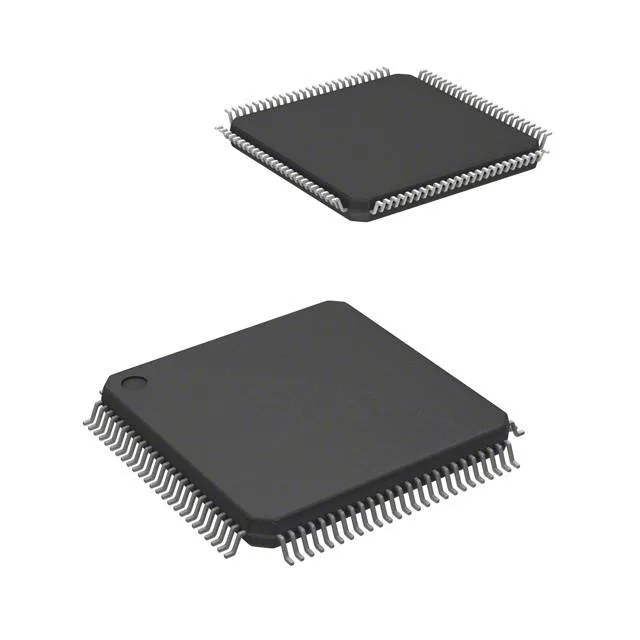
1280 LEs in a 100-TQFP — what the logic density means for your BOM
The LCMXO2-1200HC-5TG100C packs 1280 logic elements and 79 user I/O into a 100-TQFP (14x14 mm) package. That logic count places it at the lower end of the MachXO2 family — enough for glue logic, small state machines, or a handful of peripheral interfaces, but not a full soft-core processor with peripheral farm. The 64 Kbit of embedded block RAM provides a local buffer for FIFOs or small data caches without eating into the logic fabric. The 0°C to 85°C (TJ) commercial temperature grade covers indoor equipment and most telecom cabinets, but not an engine bay or unheated enclosure in a northern winter.
Speed-grade callout: -5 vs -4 — same footprint, different timing closure
The -5 speed grade in this order code is the faster sibling of the -4 grade (LCMXO2-1200HC-4TG100C). Both share identical logic density, I/O count, package, and RAM. The -5 part buys you tighter propagation delays through the routing fabric — useful when a design is already struggling to close timing at the -4 grade. If your existing BOM uses the -4 and the timing margin is comfortable, this part drops in without a board change; if you need the extra headroom for a higher clock rate, the -5 is the correct call. The industrial-temperature variant (LCMXO2-1200HC-5TG100I) extends the operating range to -40°C to 100°C (TJ) — a different part number, same package and pinout. For a commercial-only build, the -5TG100C is the cost-appropriate choice.
Active production and compliance — no obsolescence risk here
Lattice lists the LCMXO2-1200HC-5TG100C as Active. No NRND flag, no last-time-buy notice. That means the part remains in the manufacturer's standard product portfolio and is available through authorized channels. ROHS3 compliance is confirmed — no exemption-based transition risk for EU markets. The 100-TQFP package has been in production for over a decade; the tooling and assembly yield are well characterized.