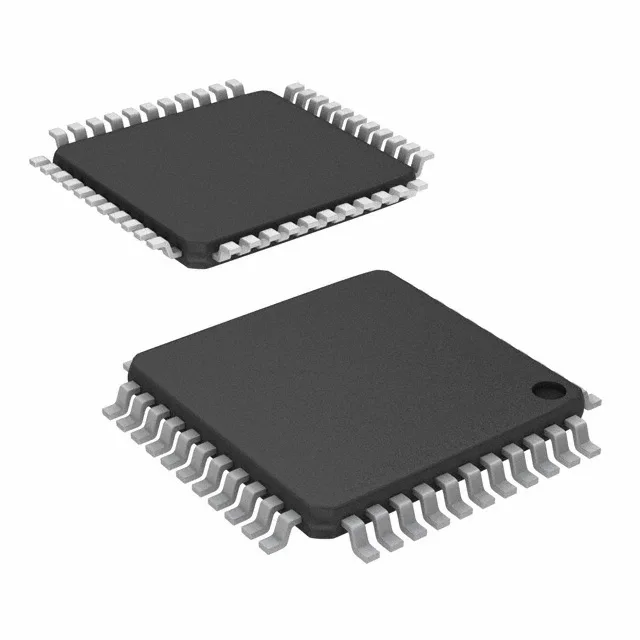
The LC4032V-25TN44C: RoHS3 compliant (lead-free) per, so it passes the environmental compliance gate for EU and most global markets without an exemption hunt.
2.5 ns pin-to-pin — the speed-grade that matters
The headline spec is a 2.5 ns maximum propagation delay (tpd1) from any input to any output through the logic array. That is the fastest speed grade in the ispMACH 4000V family — the 75-speed peer parts run 7.5 ns. For a glue-logic path that must settle within a 100 MHz clock cycle, the 2.5 ns delay leaves 7.5 ns of margin for routing and output loading before the next clock edge. The 32 macrocells and 30 I/O lines in a 44-TQFP are sized for small-scale state machines, address decoding, bus bridging, or control-signal conditioning — tasks where the propagation delay, not the logic density, decides whether the part fits.
44-TQFP rework — visible leads, no hidden pads
The 44-TQFP (10x10 mm body) is a fine-pitch but fully visible-lead package — every pin is accessible for inspection and hand rework with a hot-air station. No exposed paddle underneath, so the thermal profile is straightforward: preheat the board to 150 °C, hit the package with 300 °C air until the solder reflows, and lift. The 0.8 mm pitch is forgiving enough for a standard soldering iron tip if you only need to reflow one side.