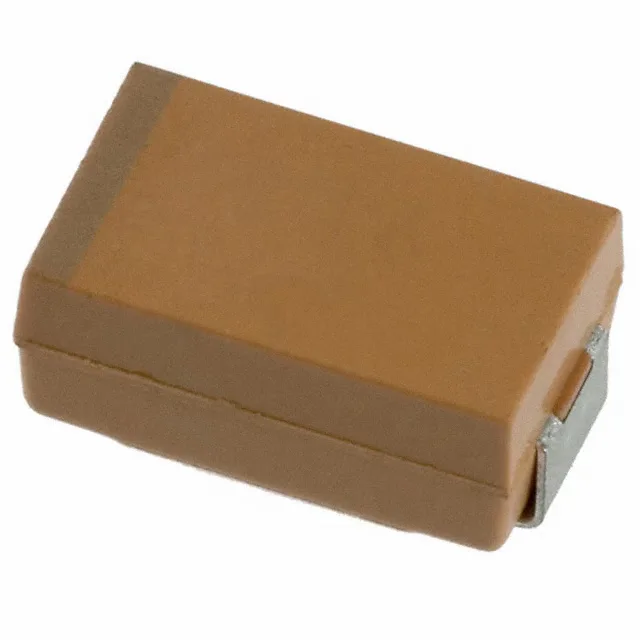
40 mOhm ESR — what it means for ripple and heat
The TPSY227K004R0040: The 40 mOhm ESR is the key parametric for the thermal budget. At 220 µF and 4 V, this ESR keeps the ripple current capability well above what a general-purpose aluminium electrolytic of similar capacitance would manage. For a DC-DC converter output, the I²R loss in the capacitor directly sets the case temperature rise — lower ESR means the part runs cooler under the same ripple current. The molded package conducts heat to the PCB pads more evenly than a dipped radial, so the board copper area is the real thermal path.
2917 case — footprint and rework reality
That is a standard large tantalum footprint — the pad layout matches the common 7343-31 pattern. For the rework bench, the molded body is less thermally fragile than a conformal-coated part; the epoxy case can take a hot-air profile at 260 °C peak for a few seconds without cracking. The key is preheating the board to 150 °C before hitting the part with hot air — lift the part, not the pad. Pin 1 is marked by the chamfer on the case, visible under magnification.
-55 to 125 °C — the full temperature envelope
Tantalum capacitors derate their voltage with temperature — at 125 °C the 4 V rating is still valid, but the ripple current limit drops.
Active production — no last-time-buy pressure
For the BOM engineer, this means the part is safe for new designs and does not require a last-time-buy hedge.