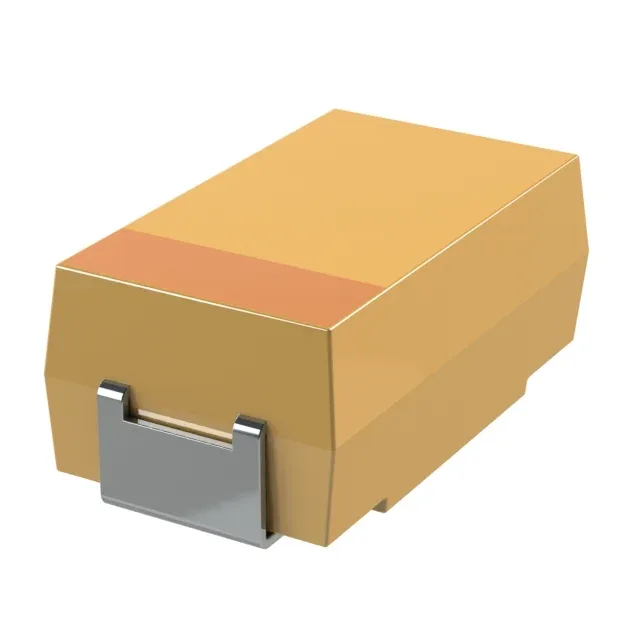
68 µF, 20 V, 150 mOhm ESR — bulk tantalum for power-rail decoupling
The TPSD686M020R0150: The 150 mOhm ESR is the AC loss term that governs ripple current capability and self-heating. For a buck converter output with 500 mA ripple current, the I²R loss in the cap is 37.5 mW — well within the package's dissipation limit at 85 °C, but at 125 °C the derating curve for MnO₂ tantalum caps reduces the allowable ripple current, so the ESR-driven temperature rise must be budgeted against the ambient ceiling.
TPS series — MnO₂ dielectric, molded case, ±20 % tolerance
The TPS series uses a manganese dioxide (MnO₂) solid electrolyte, not a polymer cathode. MnO₂ tantalums have a well-known failure mode under high inrush current or reverse bias — they can go into thermal runaway if the voltage derating rule (typically 50 % for MnO₂ types) is ignored. For a 20 V rated part, the recommended working voltage is 10 V or less for high-reliability designs; at 12 V the derating margin is 60 %, which is acceptable for most industrial applications but tight for mission-critical or avionics use. The ±20 % tolerance is standard for tantalum electrolytics — the actual capacitance at 25 °C and rated voltage can range from 54.4 µF to 81.6 µF. This spread must be accounted for in the feedback compensation of a switching regulator or the timing constant of an RC circuit. The molded case (type) provides mechanical protection and standard reflow solderability; the D case footprint matches the generic 2917 land pattern per IPC-7351.
Active lifecycle — no obsolescence concern for new designs
For designs that see sustained operation above 85 °C, the voltage derating should be increased — KYOCERA AVX application notes recommend 2/3 derating above 85 °C, which would drop the working voltage to 13.3 V for this 20 V part.