Bulk decoupling in tight voltage rails
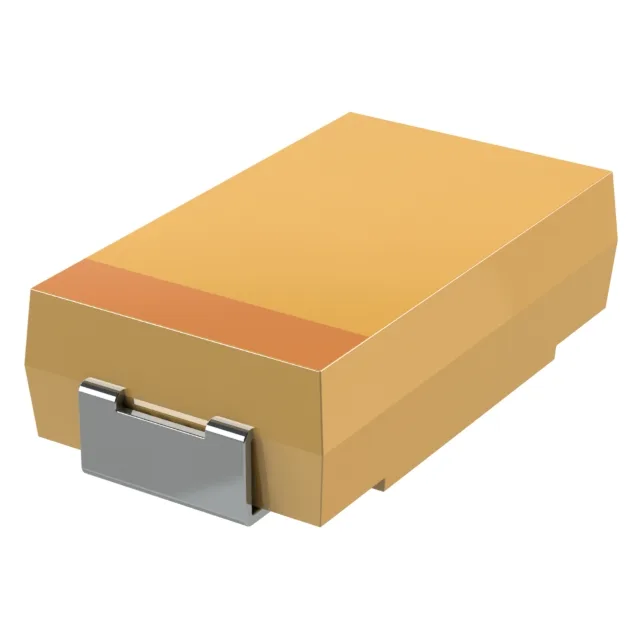
The TPSY157M010R0200: The 200 mOhm ESR is the key number for a power-integrity engineer: it sets the ripple current handling and the self-heating under load. On a switching regulator output, that ESR limits the AC ripple voltage to a predictable level — lower than a general-purpose aluminum electrolytic of the same capacitance, which typically runs 500 mOhm or higher at this form factor.
Temperature sweep and derating margin
The molded construction keeps the capacitance stable across that band — tantalum dielectrics shift less than 10% from the 25°C value over temperature, unlike X5R/X7R ceramics that can lose 30-60% under DC bias at the same temperature. For a 10 V rated part on a 5 V rail, the 50% derating margin is standard practice for tantalum — it keeps the failure rate in the low FIT range. The ±20% tolerance means the minimum capacitance at end-of-life is 120 µF, which still meets most bulk decoupling targets for a 3 A load step.
The molded case carries no explicit RoHS/REACH statement in this listing, but as a standard tantalum capacitor from KYOCERA AVX, it is expected to be RoHS-compliant. For formal certification documents (RoHS declaration, REACH SVHC report, or UL recognition), request them with the RFQ — they are typically available from the manufacturer upon request.