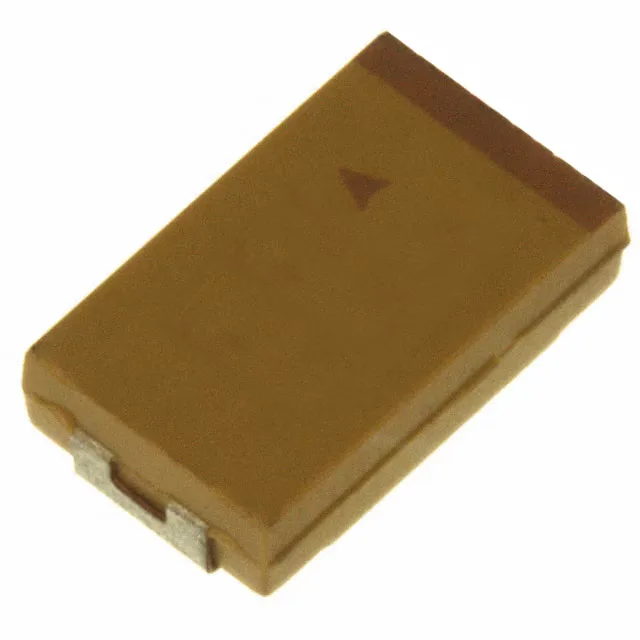
The TPSW686K006R0250: The 250 mOhm ESR is the key parameter for ripple current handling — it sets the self-heating limit under AC ripple and the output voltage droop during a load transient. For a 100 kHz buck converter output, the 250 mOhm ESR contributes roughly 17 mV of ripple per amp of ripple current, which is typical for a tantalum in this case size. The ±10% tolerance covers the full temperature range of -55°C to +125°C, making it suitable for industrial and automotive environments where the capacitor sees both cold start and under-hood heat.
Active lifecycle — no LTB pressure on this BOM line
Listed as Active by KYOCERA AVX, the TPSW686K006R0250 carries no end-of-life notice or last-time-buy deadline. This is a standard-production tantalum in the TPS series — a mature, widely used molded construction that has been in continuous manufacture for years. For a procurement planner, this means no urgency to stockpile or qualify a substitute; the part can be ordered against a BOM without a lifecycle clock ticking.
250 mOhm ESR — what it means for the circuit
The 250 mOhm ESR at 100 kHz is the figure that governs how much AC ripple the capacitor can absorb before its internal temperature rise exceeds the derating curve. For a typical 1 A ripple current, the I²R loss is 250 mW — well within the 2312 case's dissipation capability at 85°C, but at 125°C the derating factor reduces the allowable ripple by roughly half. In a hold-up capacitor application, the ESR also sets the initial voltage drop when the load steps: a 2 A step causes a 500 mV IR drop across the ESR before the bulk capacitance starts to discharge.