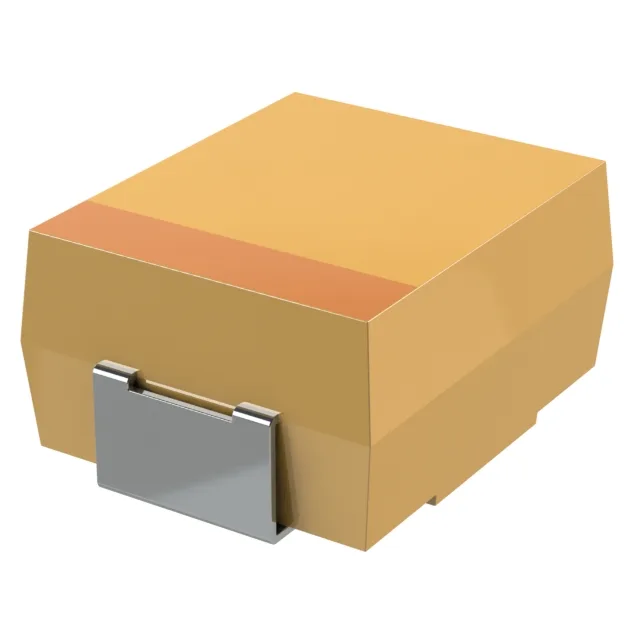
68 µF at 25 V — the ESR tells the ripple story
The TPSV686K025R0150: The 150 mOhm ESR is the spec that governs how much ripple current this part can handle before self-heating becomes a derating issue. For a 68 µF tantalum in a 2924 case, that ESR is mid-pack — low enough for most bulk decoupling and filtering on a 25 V rail, but not the ultra-low-ESR tier you would pick for a high-ripple switching regulator output. The ±10% tolerance is standard for solid tantalum chips; the actual capacitance at rated DC bias will sit near the nominal 68 µF, with the typical voltage coefficient of tantalum dielectrics pulling it down slightly at full 25 V.
Molded case, full temp range — where it fits
Molded construction means the tantalum element is encapsulated in a solid epoxy case — no liquid electrolyte to leak or dry out over time. That makes it a fit for long-life equipment, high-vibration environments, and sealed assemblies where a wet electrolytic would be a reliability risk. The -55°C to 125°C operating range covers the full military temperature band. At the hot end, the leakage current rises and the capacitance derates slightly, but the solid construction holds up to the rated limit without the electrolyte freeze or boil failure modes of a wet aluminum electrolytic. The V case code is the tallest in the TPS series — check the clearance above the component on the board, especially if the opposite side has components or a housing lid.
It is a current-production catalog part, not a phase-out or last-time-buy item. The tape-and-reel packaging (Cut Tape also available) suits both prototype and production volumes.