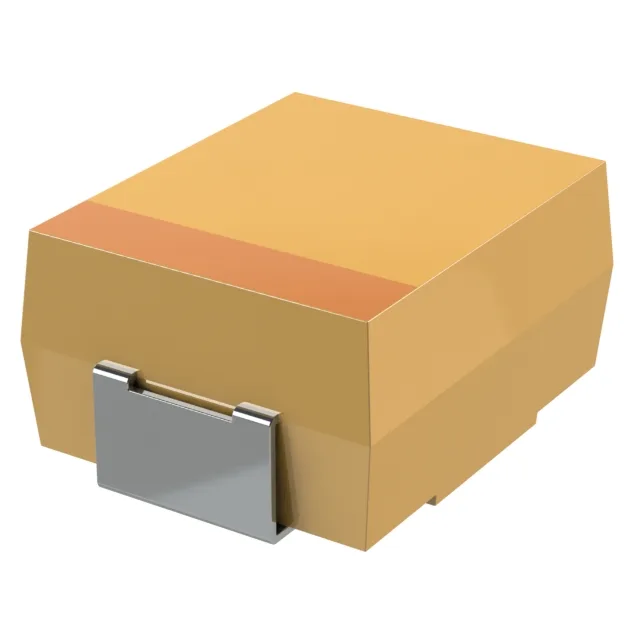
What the 50 mOhm ESR means for your rail
The TPSV227M016R0050: That ESR figure is the headline here — at 220 µF and 16 V, 50 mOhm is low enough that ripple voltage on a switching regulator output stays under control without needing multiple caps in parallel. For a 5V rail feeding an FPGA core or a 3.3V bus on a mixed-signal board, this one part handles the bulk decoupling. It needs a decent copper pad area on the board to sink the heat during reflow and to keep the ESR stable under load. The molded construction means no liquid electrolyte to leak or dry out, which is why tantalums like this one hold their capacitance over years in the field.
Temperature range and where it fits
Tantalum capacitors should be derated by at least 20% on voltage for reliability; at 16 V rated, a 12V rail leaves 25% margin, which is comfortable. The ±20% tolerance is standard for tantalum electrolytics — fine for bulk decoupling where the exact capacitance matters less than the ESR and voltage rating. If you need tighter tolerance for a timing circuit, this is not the part; it is built for power rail smoothing.
Active production — no end-of-life scramble
Packaged in tape and reel (cut tape also available), so it feeds straight into a pick-and-place line. The 2924 case is a common size — no special nozzle or feeder needed.