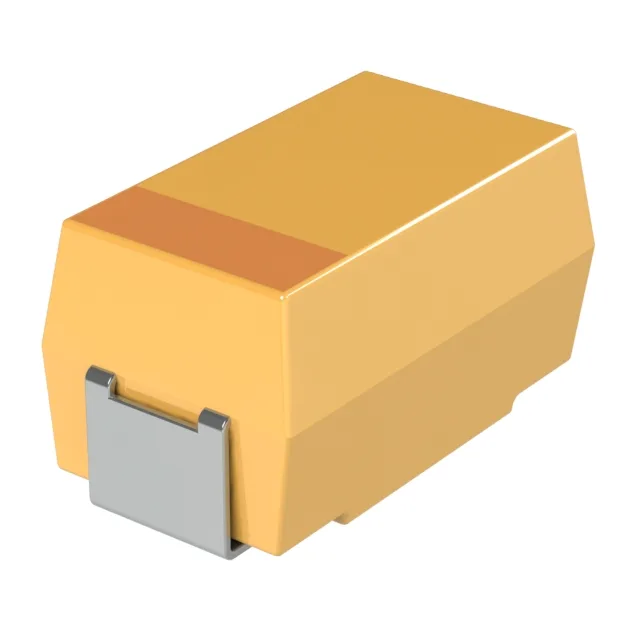
68 µF at 20 V — molded tantalum with 150 mOhm ESR
The TPSE686K020H0150: The ±10% tolerance and the 2917 (7343 Metric) case code E package suit it for bulk decoupling and filtering roles on surface-mount boards where board space is constrained but capacitance density is needed.
ESR and ripple — what the 150 mOhm figure governs
The 150 mOhm ESR at 100 kHz is the dominant loss term for ripple current handling. At 20 V and 68 µF, the self-resonant frequency sits in the low-MHz region — below that the impedance is capacitive; above it the ESR sets the floor. For a switching regulator input or output filter, the ripple current rating (derived from the ESR and the maximum internal temperature rise) determines how much AC current the part can sustain before the core temperature exceeds the 125 °C ceiling. Because the ESR is specified at room temperature and rises with frequency above resonance, the actual ripple capability at the converter switching frequency may be lower than a DC ESR figure suggests. The 150 mOhm value is a solid starting point for a 200–500 kHz buck output stage; for higher switching frequencies a polymer electrolytic or ceramic bank may be needed to keep the impedance below 50 mOhm.
Active lifecycle — sourcing posture
The molded case and tape-and-reel packaging (cut tape available) mean the part ships in standard EIA-481 embossed carrier tape, compatible with automated pick-and-place.