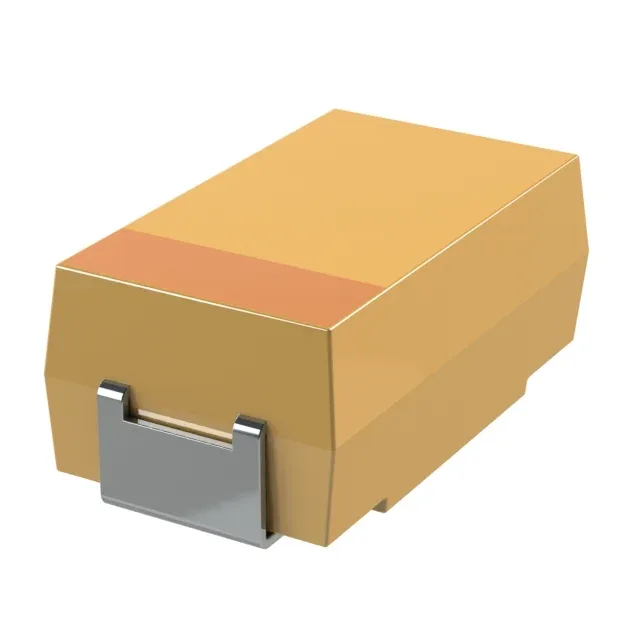
What the 70 mOhm ESR means for your rail
The TPSD337M006R0070: That ESR figure is the one that decides how much ripple current the part can handle before self-heating becomes a problem — lower ESR means less internal temperature rise for the same AC current, which matters when you're using it to smooth a switching regulator output or decouple a digital rail. The D-case (2917 / 7343 Metric) footprint is a standard size for this capacitance range, so the PCB land pattern is well-established across designs.
Temperature range and deployment context
That means it can sit on a board inside an outdoor telecom enclosure or an engine-bay ECU without derating below the 6.3 V rail voltage at the hot end — the tantalum dielectric holds its capacitance across the range, though ESR rises with temperature. The molded case construction (Type: Molded) provides mechanical protection during reflow and handling. The ±20% tolerance is standard for tantalum electrolytics — the actual capacitance at 6.3 V bias will sit within that band, so budget the low-end value for timing or filter circuits that depend on the absolute capacitance.
Active lifecycle — sourcing posture
The TPS series is a standard low-ESR tantalum line from KYOCERA AVX, so the supply base is broad through authorized and independent distribution. The tape-and-reel packaging suits automated pick-and-place assembly in volume production.