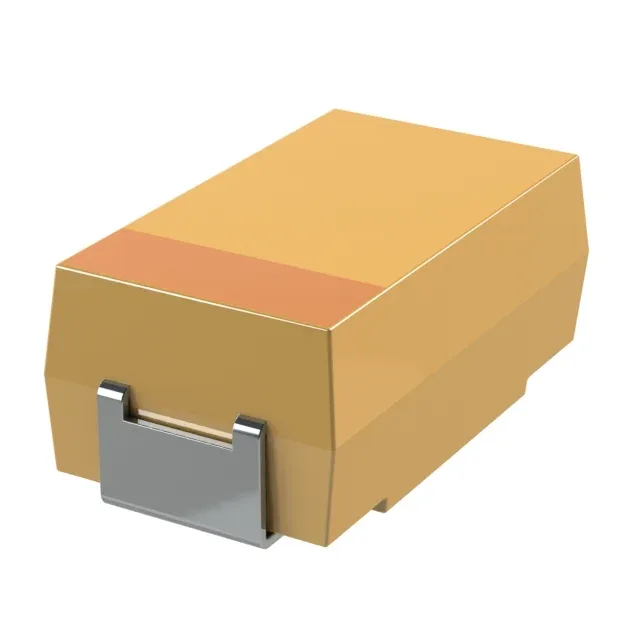
The TPSD337K006H0045: The 45 mOhm ESR is the figure that governs ripple current handling and self-heating in the circuit — lower ESR means the cap can absorb more AC ripple before the internal temperature rise becomes a derating concern. The D-size case (2917 / 7343 metric) is a common footprint for bulk tantalum caps on power rails and decoupling stages.
Temperature range and ESR — the real selection axes
At the hot end, the leakage current rises and the capacitance drifts — the 45 mOhm ESR is specified at 25°C and will increase with temperature, so the ripple current derating at 85°C or 125°C needs to be checked against the application's actual thermal profile. The 45 mOhm ESR at 6.3 V means the self-heating from ripple current is manageable in most bulk decoupling roles. The AC ripple current rating at 100 kHz is typically derived from the ESR and the maximum internal temperature rise — the 45 mOhm figure is the starting point for that calculation. Tolerance is ±10%, which is standard for tantalum electrolytics of this class. The 330 µF nominal value will land between 297 µF and 363 µF at 25°C — the capacitance drops with temperature, so at -55°C the actual value will be closer to the low end of the range.
The molded D-case package (2917) is a standard tape-and-reel format, so supply is generally stable for volume requirements.