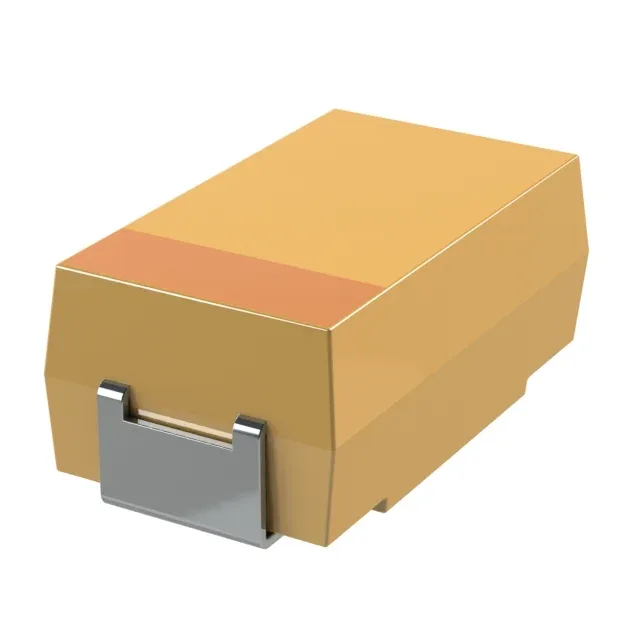
220 µF bulk cap with 100 mOhm ESR — what the numbers mean for the rail
The TPSD227M010R0100V: The 100 mOhm ESR at 100 kHz is the key thermal parameter: it sets the ripple current rating and the self-heating under AC load. For a 100 kHz switching regulator output, the ripple current through the cap generates I²R losses that raise the internal temperature above ambient — the 2000-hour endurance at 125 °C assumes the self-heating stays within the derating curve.
Temperature grade and lifetime — where this cap survives
Rated for -55 to +125 °C operation with 2000 hours endurance at the top temperature. This is the full military/industrial temperature band — the cap holds its capacitance and ESR across the range, though the leakage current rises exponentially above 85 °C. For a 125 °C ambient application, the 10 V rated voltage should be derated to 7 V or less to stay within the safe operating area; the 220 µF value at 7 V still provides 10.78 mJ of stored energy. The ±20 % tolerance is standard for tantalum electrolytics — the actual capacitance at 25 °C can range from 176 µF to 264 µF. In a filter pole calculation, design for the worst-case -20 % value to guarantee the cutoff frequency stays above the minimum requirement.