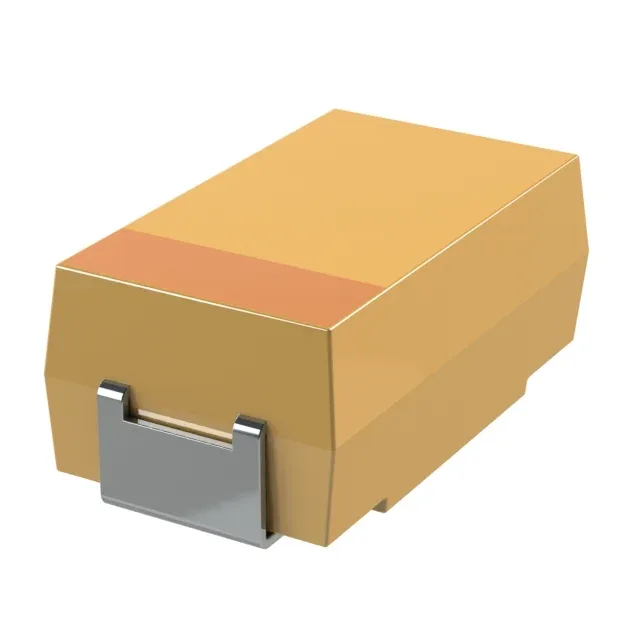
33 µF, 35 V — the derating decision drives the selection
This TAJD336K035RNJV is a 33 µF, 35 V molded tantalum capacitor in the D case (2917 metric). The 35 V rating is the headline selection parameter: for a 12 V rail, a 2:1 derating to 17.5 V leaves 17.5 V headroom — comfortable margin against surge and ripple. For a 24 V rail, the same derating requires a 50 V part; this 35 V cap fits only with a lighter derating factor, which the reliability engineer must sign off. The ±10% tolerance is the standard production band — tight enough for most filtering and bulk storage roles; the 20% band sibling would be the cost-optimised alternative if the application can absorb the wider spread.
The 900 mOhm ESR at 100 kHz sets the ripple current limit: at 100 kHz, the power dissipation in the capacitor is I² × 0.9. For a 0.5 A ripple current, that is 225 mW — well within the D case's thermal budget at 85°C, but at 125°C the allowable power drops per the derating curve. This ESR is typical for a D case tantalum at this voltage and capacitance; it is not a low-ESR polymer part, so it is better suited for bulk storage than for high-frequency decoupling where ESR below 100 mOhm is preferred.
The 2000-hour endurance at 125°C is the rated life under maximum temperature and rated voltage. In an engine-bay ECU that sees 105°C ambient, the capacitor's internal temperature will be higher due to self-heating — the 2000-hour rating means the part is qualified for continuous operation at the temperature extreme, not that it fails after 2000 hours. At lower temperatures, lifetime extends per the Arrhenius model typical for tantalum capacitors.
Active production — sourcing via independent distribution
The D case (2917) is a standard footprint shared with many tantalum capacitors from Kemet, Vishay, and other manufacturers. If a second-source is needed, look for a 33 µF, 35 V, D case, ±10% tantalum from those vendors — the footprint and electrical ratings are interchangeable, but confirm the ESR and lifetime specs match the application.