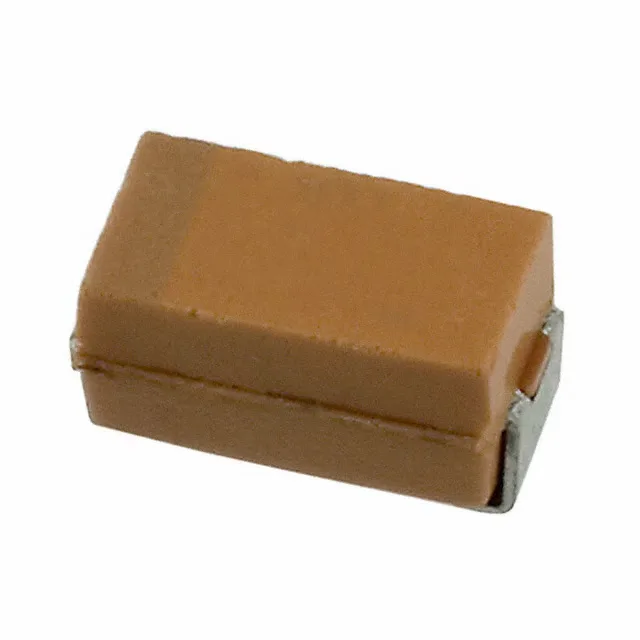
KYOCERA AVX TAJA476K006RNJV — Specialty Capacitors

TAJA476K006RNJV KYOCERA AVX Molded Tantalum Capacitor 47 µF

MPNTAJA476K006RNJV
Active

KYOCERA AVX TAJ series, molded tantalum capacitor, 47 µF ±10%, 6.3 V rated, 1.6 Ohm ESR at 100 kHz, 1206 (3216 metric) package, -55°C to 125°C operating range.

$0.4300Ref. price · indicative, final on quote
Independent supplier — new & surplus stockAuthenticity-screened · ESD-safe packingListing updated Aug 2026

Specifications

TAJA476K006RNJV specifications
ParameterValue
TypeMolded
SeriesTAJ
MountingSurface Mount
ESR1.6Ohm @ 100kHz
Voltage - rated6.3 V
Operating temperature-55°C~125°C
Size (Dimension)0.126\" L x 0.063\" W (3.20mm x 1.60mm)
Height - seated0.071\" (1.80mm)
PackageTape & Reel (TR); Cut Tape (CT)
FeaturesGeneral Purpose
Tolerance±10%
Capacitance47 µF
Case1206 (3216 Metric)
Lifetime2000 Hrs @ 125°C
Manufacturer size codeA

Product details

What the 47 µF rating buys you in a low-voltage rail

The TAJA476K006RNJV is a 47 µF molded tantalum capacitor from KYOCERA AVX's TAJ series, rated at 6.3 V with ±10% tolerance.

ESR and lifetime — the thermal reality check

ESR is specified at 1.6 Ohm at 100 kHz. In a switching regulator output filter, that ESR sets the ripple voltage and the I²R self-heating. At 125°C the part is rated for 2000 hours — if your design runs cooler, say 85°C, the useful life extends well beyond that figure following the Arrhenius acceleration typical of tantalum capacitors.

The 1206 package (3.20 mm x 1.60 mm footprint, 1.80 mm seated height) fits tight PCB layouts where vertical clearance is limited.

Frequently asked questions

Can I replace TAJA476K006RNJV with a ceramic capacitor?

A ceramic capacitor of the same capacitance and voltage rating will have a different ESR profile and DC bias characteristic — ceramic capacitance drops significantly as DC voltage approaches the rated voltage, while tantalum does not. If the application relies on stable capacitance at 6.3 V, the tantalum is the safer choice. For high-frequency decoupling where low ESR is critical, a ceramic may be preferred, but the BOM position should be re-verified for ripple and transient response.