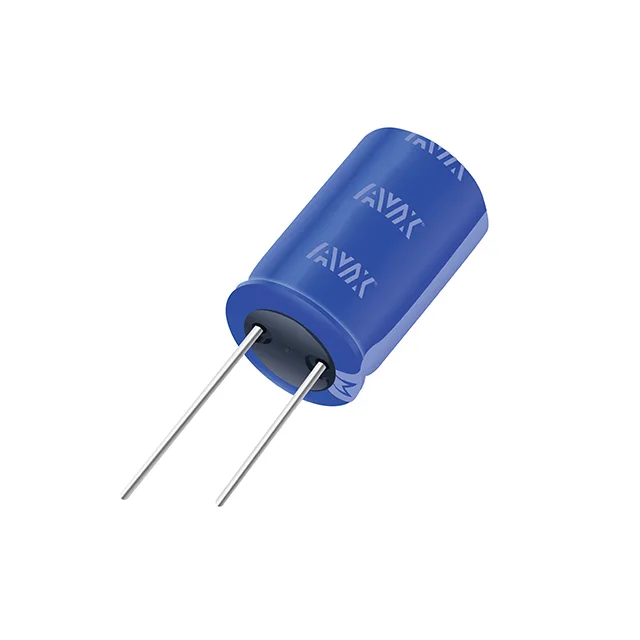
KYOCERA AVX SCCY62V307VSB — Supercapacitors

KYOCERA AVX SCCY62V307VSB Supercapacitor, 300 F, 2.7 V

MPNSCCY62V307VSB
Active

KYOCERA AVX SCC series supercapacitor, SCCY62V307VSB, 300 F, 2.7 V, -5% +25% tolerance, radial can with solder lug, through hole.

$8.9650Ref. price · indicative, final on quote
Independent supplier — new & surplus stockAuthenticity-screened · ESD-safe packingListing updated Aug 2026

Specifications

SCCY62V307VSB specifications
ParameterValue
SeriesSCC
MountingThrough Hole
Voltage - rated2.7 V
Operating temperature-40°C ~ 65°C
Size (Dimension)1.378\" Dia (35.00mm)
Height - seated2.520\" (64.00mm)
PackageBulk
Tolerance-5%, +25%
Capacitance300 F
TerminationSolder Lug
Lead spacing0.886\" (22.50mm)
CaseRadial, Can - Solder Lug
Lifetime1000 Hrs @ 60°C

Product details

300 F at 2.7 V — sizing for hold-up and pulse loads

The SCCY62V307VSB is a 300 F supercapacitor from KYOCERA AVX's SCC series, rated at 2.7 V. That capacitance stores about 1.1 kJ at full voltage — enough to bridge a 100 ms power gap at 10 A or supply a 50 W pulse for a couple of seconds. The -5%, +25% tolerance is typical for carbon-based supercaps; the wide positive side means a series stack needs voltage balancing to keep each cell below its 2.7 V ceiling. The radial can measures 35 mm diameter by 64 mm seated height, with solder lug terminals on 22.5 mm lead spacing. Through-hole mounting with the lugs lets it carry the high peak currents without a PCB trace bottleneck — the lugs take a wire or bus bar directly.

Lifetime and thermal derating

Rated lifetime is 1000 hours at 60°C. Supercapacitor aging follows an Arrhenius model — every 10°C drop roughly doubles the life, so at 45°C you can expect around 4000 hours, and at 25°C the useful life extends well beyond the rated figure. The operating range is -40°C to 65°C, which covers industrial enclosures and outdoor cabinets but not engine-bay temperatures.

Frequently asked questions

What is the capacitance tolerance and why does it matter?

Tolerance is -5%, +25%. The wide positive side is typical for supercapacitors; in a series stack the cell with the highest capacitance sees the lowest voltage, but the asymmetric tolerance means you must design the balancing circuit for the worst-case spread, not the nominal value.