Capacitance and voltage — sizing the energy reserve
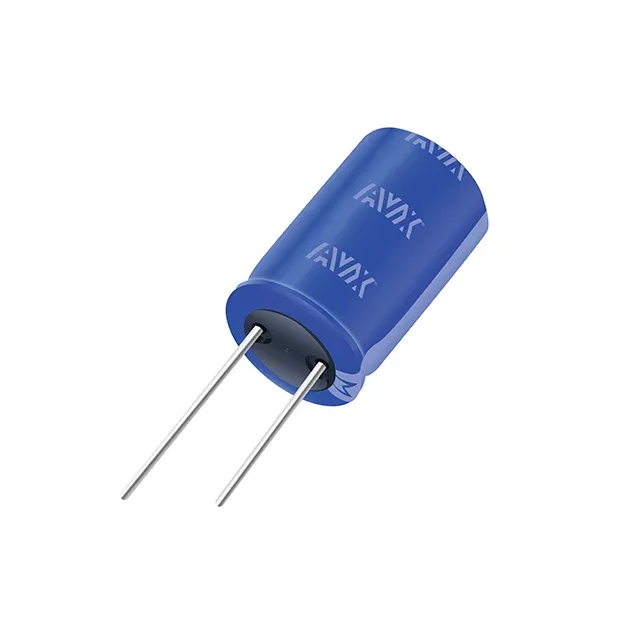
The SCCR25B505PRB: Rated 5 F at 2.7 V, this SCC-series supercapacitor stores enough energy for a brief ride-through or peak-power assist — think backup of a real-time clock or smoothing a current pulse that would otherwise brown out the rail. The 85 mOhm ESR at 1 kHz sets the charge/discharge efficiency: a 1 A pulse drops 85 mV across the internal resistance, so the usable energy fraction depends on the load profile.
Lifetime and temperature — what the 2000-hour rating means
Rated 2000 hours at 65°C — this is the accelerated life test condition, not the calendar life. In a 40°C ambient the expected operating life extends well beyond 2000 hours, but every 10°C above 65°C halves the lifetime. The -40°C to 65°C operating range covers most indoor and outdoor enclosures, but keep the ripple current within the datasheet limits to avoid self-heating that shortens life. The 0%/+100% tolerance means a unit marked 5 F can measure anywhere from 5 F to 10 F. For timing or backup-duration calculations, design for the minimum capacitance at end of life — the tolerance stack-up plus aging can cut the effective energy storage by half.
Board-fit and sourcing
Through-hole radial can, 8.00 mm diameter, 26.50 mm seated height, with 3.50 mm lead spacing and PC pin termination — a standard layout that fits most single-cell supercapacitor footprints. Bulk packaging means the parts ship in tubes or trays, not tape-and-reel; factor that into the pick-and-place feeder setup if you're automating assembly.