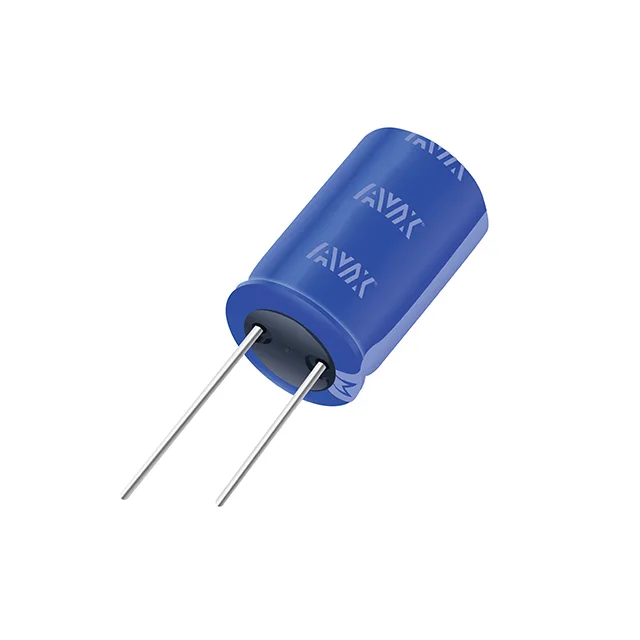
KYOCERA AVX SCCR12E105PRB — Supercapacitors

KYOCERA AVX SCCR12E105PRB Supercapacitor, 1 F, 3 V, Radial

MPNSCCR12E105PRB
Active

KYOCERA AVX SCC Series supercapacitor, SCCR12E105PRB, 1 F, 3 V, 180 mOhm ESR, Radial Can, Through Hole, Bulk.

$2.0700Ref. price · indicative, final on quote
Independent supplier — new & surplus stockAuthenticity-screened · ESD-safe packingListing updated Aug 2026

Specifications

SCCR12E105PRB specifications
ParameterValue
SeriesSCC
MountingThrough Hole
ESR180mOhm @ 1kHz
Voltage - rated3 V
Operating temperature-40°C ~ 65°C
Size (Dimension)0.315\" Dia (8.00mm)
Height - seated0.551\" (14.00mm)
PackageBulk
Tolerance0%, +100%
Capacitance1 F
TerminationPC Pins
Lead spacing0.138\" (3.50mm)
CaseRadial, Can
Lifetime1000 Hrs @ 60°C

Product details

1 F, 3 V rated — the energy buffer for short-duration hold-up

The KYOCERA AVX SCCR12E105PRB is a 1 F supercapacitor rated at 3 V, packaged in a radial can with PC pins for through-hole mounting. The 180 mOhm ESR at 1 kHz sets the charge/discharge efficiency ceiling — in a typical 3 V rail hold-up circuit, the internal resistance limits the instantaneous current draw to about 16.7 A before the voltage drop across the ESR equals the rated voltage, so the actual usable current is lower and depends on the load's tolerance for voltage sag.

Temperature and lifetime — the derating reality

Rated for 1000 hours at 60°C, the SCCR12E105PRB's lifetime halves for every 10°C rise above that temperature — a common rule for electrolytic and supercapacitor chemistries. The operating range of -40°C to 65°C means it functions in outdoor telecom cabinets or cold storage environments, but the 65°C ceiling is the absolute limit; sustained operation near that boundary accelerates the aging curve.

Frequently asked questions

What is the ESR of SCCR12E105PRB and why does it matter?

The ESR is 180 mOhm at 1 kHz. This value determines the I²R heating during charge/discharge cycles and the voltage drop under load. A lower ESR means higher peak current capability and less self-heating, which directly affects the usable energy you can extract before the voltage sags below the load's minimum operating threshold.