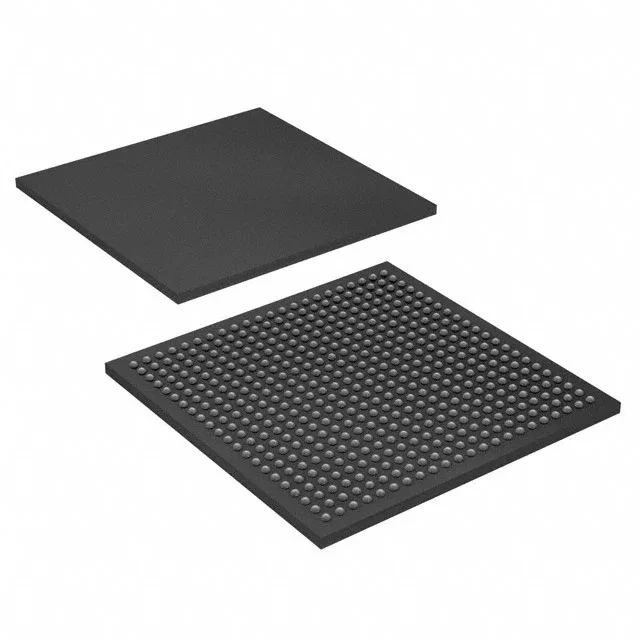
75K-LE FPGA in a 484-ball BGA — what the density and I/O mean for the board
The Intel EP4CE75F23C7 is a Cyclone IV E FPGA delivering 75408 logic elements and 292 user I/O in a 484-ball FBGA package (23x23 mm). That logic count sits in the middle of the Cyclone IV E family — enough for a soft-core processor, a few DSP pipelines, and a modest peripheral set, but not the top-tier density for video or multi-gigabit transceiver designs. The 292 I/O are all general-purpose; there are no high-speed serial transceivers on this die, so the part is a fit for parallel bus interfaces, memory controllers, and glue logic consolidation where the I/O count matches the board-level routing budget of a 484-BGA. The 2810880 total RAM bits are distributed as M9K memory blocks.
Comparing the EP4CE75F23C7 to the smaller EP4CE40F29C8
The EP4CE75F23C7 is roughly double the logic density of the EP4CE40F29C8 (75408 logic elements vs 39600). The I/O count also differs: 292 on the 75K part versus 532 on the 40K part — but that is because the 40K part comes in a larger 484-ball package with more I/O balls assigned. If your design needs the extra I/O but not the extra logic, the EP4CE40F29C8 is worth a look. If you need the logic and can route within 292 I/O, the 75K part is the correct density tier.
That is a commercial-grade window.