Logic density and I/O count for the BOM line
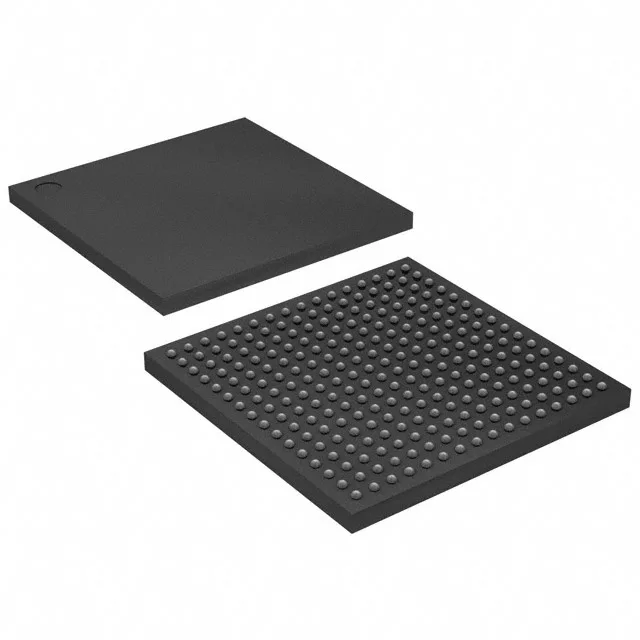
The EP4CE15F17C8 packs 15,408 logic elements in a 256-LBGA footprint — that is the medium-density sweet spot of the Cyclone IV E family, between the 10,320-LE EP4CE10 and the 6,272-LE EP4CE6. For a design that outgrew a smaller gate-count array but does not need the 150k-LE fabric of a higher-tier part, this is the right bin. With 165 user I/O brought out to the 256-ball grid, the fanout drives the board-layer decision. A 17x17 mm 0.80 mm pitch BGA like this one typically routes on a 4-layer board; two layers will struggle to escape the inner balls without dog-leg vias.
On-chip memory and supply rails
516,096 total RAM bits (504 Kbit) give the fabric enough local storage for small FIFOs, line buffers, or coefficient tables without reaching for external SRAM. Temperature grade is commercial: 0°C to 85°C junction. That covers most indoor equipment and telecom central-office environments but not engine-bay or outdoor pole-mount gear. For extended temperature, the 'I7' suffix variant (EP4CE15F17I7) spans -40°C to 100°C.
Active lifecycle — no LTB clock ticking
Intel lists the EP4CE15F17C8 as Active. The Cyclone IV E family has broad installed base and multiple package variants sharing the same core architecture. If a board spin later requires a different I/O count or package, the migration stays within the same logic fabric and tool chain.
Board-level integration note
The 256-FBGA (17x17 mm) package uses a 0.80 mm ball pitch. Decoupling capacitors should sit within 5 mm of each VCC and VCCIO ball pair — the tight pitch leaves little room for via-in-pad on the inner rows, so a 4-layer stack with buried vias is the standard approach. The device is supplied in tray packaging, not tape-and-reel. For automated pick-and-place, the tray nests into standard JEDEC matrix trays; verify feeder compatibility if your line runs reel-only.