What this clock generator does on your board
The W196G is a PLL-based spread spectrum clock generator from Infineon that takes a single crystal input and fans it out to up to 13 clock outputs. That 1:13 ratio means one reference crystal drives the whole clock tree — saves a crystal per output and cuts board area. It packs two independent PLL circuits, so you can generate different frequency families — say 24 MHz for the MCU core and 48 MHz for a USB PHY — from the same reference. The spread-spectrum modulation spreads the radiated energy, which helps pass FCC/CE emissions testing without extra shielding. Output frequency ceiling hits 14.318 MHz, 24 MHz, and 48 MHz — common clock rates for legacy PC chipsets, Ethernet controllers, and mid-range MCUs.
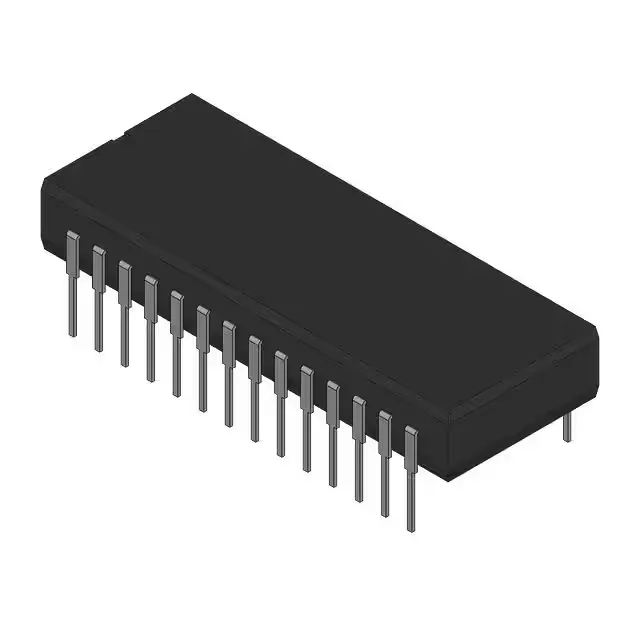
This part belongs in a desktop PC, a network switch in a climate-controlled comms room, or a lab instrument. Not for the engine bay, not for an outdoor base station in July. Package is a 28-SOIC wide-body (7.50 mm width). That's a standard footprint — any rework tech with a hot-air station can swap it. No BGA, no hidden balls.
Sourcing and compliance reality
That means it's still a standard catalog line — no LTB panic, no forced redesign. Critical catch: the W196G is RoHS non-compliant. If your assembly line is RoHS-only with no exemption, this part won't go through reflow. You'll need a leaded process or a waiver. Sourced per RFQ — no stock-holding claim on our side. We quote against your BOM quantity and target lead time. The 28-SOIC package is common enough that supply is generally available through the distribution channel, but the RoHS restriction narrows the buyer pool, so availability can tighten.