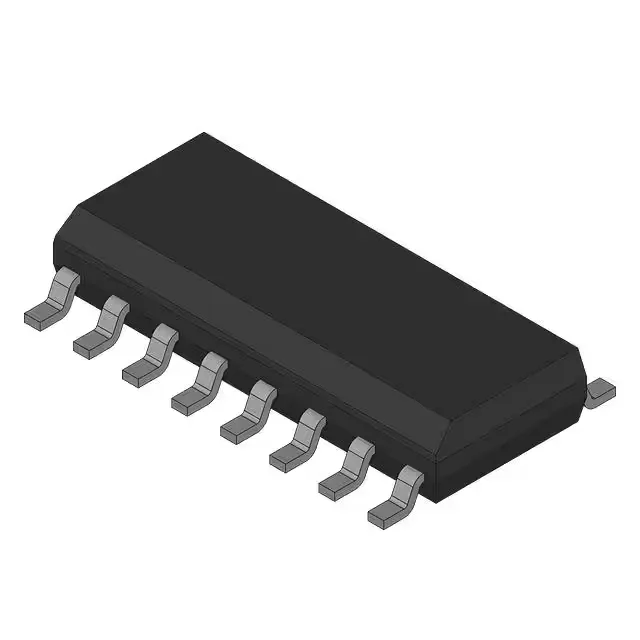
Infineon Technologies W152-12GT — Clock & Timing ICs

W152-12GT Zero Delay Buffer, PLL, 140 MHz, 1:8, 16-SOIC

MPNW152-12GT
End of Life

Cypress Spread Aware™ W152-12GT, Zero Delay Buffer, PLL-based clock driver, 140 MHz max frequency, 1:8 input:output ratio, 2.97V–3.63V supply, 16-SOIC surface mount, commercial temperature range 0°C to 70°C.

$3.67Ref. price · indicative, final on quote
Packaging16-SOIC (0.154", 3.90mm Width)
StockContact for availability
MOQ1 pcs
  • 100% new & originalTraceable channels only — no refurbs, no pulls, no remarked parts.
  • Date & lot codes on quoteStated per line before you commit; label photos on request.
  • MSL-compliant ESD packingMoisture-sealed bags with indicator cards; reels photo-verified.
  • PayPal buyer protectionPay by T/T, PayPal or Payoneer — card payments covered end to end.

Specifications

W152-12GT Technical Specifications
ParameterValue
TypeZero Delay Buffer
SeriesSpread Aware™
Mounting typeSurface Mount
Voltage2.97V ~ 3.63V
Frequency140MHz
Operating temperature0°C ~ 70°C (TA)
PLLYes
PackageBulk
Case16-SOIC (0.154\", 3.90mm Width)
Divider (Multiplier)Yes/No
Number of circuits1
Ratio - Input:Output1:8
Differential - Input:OutputNo/No

Product details

PLL-based clock distribution in a 16-SOIC footprint

The Cypress W152-12GT is a PLL-based Zero Delay Buffer from the Spread Aware™ series, designed to regenerate a clean, phase-aligned clock output from a potentially noisy input. It accepts a single-ended clock input and fans it out to eight outputs (1:8 ratio) at frequencies up to 140 MHz, making it a fit for distributing reference clocks across a PCB without adding skew or jitter. The part operates from a 2.97V to 3.63V supply and is specified over the commercial temperature range of 0°C to 70°C, which suits indoor, temperature-controlled equipment such as networking gear, servers, and test instrumentation.

140 MHz ceiling and 1:8 fanout — what they mean for the clock tree

The 140 MHz maximum frequency covers common clock rates for Ethernet PHYs (125 MHz), DDR memory interfaces (133 MHz), and PCIe reference clocks (100 MHz). The 1:8 fanout lets one oscillator or crystal feed up to eight downstream loads without needing a separate buffer tree, reducing BOM count and PCB area. The PLL inside the W152-12GT cleans up jitter from the input and locks the output phase to the input, so the eight outputs maintain low skew relative to each other — important for synchronous designs where clock distribution delay must match across multiple devices.

Supply voltage and temperature — fit for the environment

The 2.97V to 3.63V supply range aligns with standard 3.3V logic rails, with enough margin to ride through a 5% drop without losing PLL lock. The 0°C to 70°C commercial temperature grade limits deployment to indoor, climate-controlled environments — not suitable for industrial, automotive, or outdoor applications where the ambient can swing below freezing or above 70°C. If the design lives in a server rack or a lab instrument, this part is right at home.

Active lifecycle — no EOL watch needed

There is no last-time-buy notice, no NRND flag, and no EOL risk to plan around. For production BOMs that need a stable clock buffer without supply-chain surprises, this part is a straightforward choice.

Frequently asked questions

What are equivalents or alternatives for W152-12GT?

A functional alternative is the CY2305SXI-1HT, also a Zero Delay Buffer with PLL, but it operates at a 133.33 MHz maximum frequency and offers a 1:5 fanout ratio instead of the W152-12GT's 1:8. The CY2305SXI-1HT also supports an extended industrial temperature range of -40°C to 85°C, which covers environments the commercial-grade W152-12GT does not.

Can W152-12GT be used to fan out a 25 MHz clock?

Yes. The W152-12GT accepts input frequencies up to 140 MHz, so a 25 MHz reference clock is well within its operating range. The PLL locks to the input and regenerates a clean, phase-aligned 25 MHz output on all eight channels.