175°C junction rating — where this sensor survives
That 175°C ceiling puts it in the class of sensors that can sit on a transmission valve body or inside an engine-mount actuator where ambient air hits 150°C and the self-heating from the magnet and coil pushes the die higher. Most standard Hall sensors top out at 150°C junction; this part gives a 25°C margin that matters for long-term reliability in oil-splash or exhaust-adjacent locations. The output is available as both an analog voltage and a PWM signal. Analog feeds directly into an ECU's ADC without a protocol layer; PWM gives a noise-immune digital link that can be read by a timer capture unit on a microcontroller. The choice lets the system designer trade off pin count against noise immunity without changing the sensor footprint.
AEC-Q100 and the 4 V supply rail
For a tier-1 BOM this is non-negotiable; for industrial or off-highway applications it is a reliability bonus that costs no extra board space. Supply voltage is 4 V. That is a single-rail design — no separate analog and digital supply needed. The 4 V level sits between the common 3.3 V and 5 V rails; if the system runs on 5 V, a simple series resistor and zener clamp or a low-drop regulator can drop the rail. Confirm the dropout margin at the minimum battery voltage in your application.
Through-hole PC pin — assembly and footprint
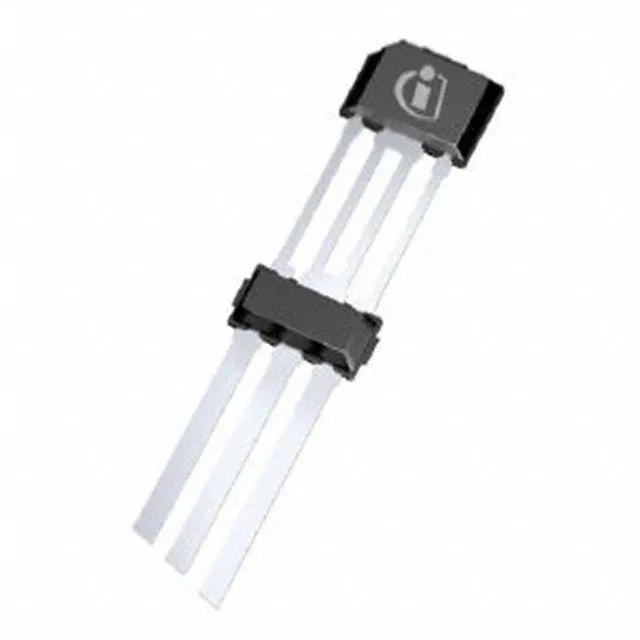
The package is through-hole with PC pin terminals. That means wave solder or hand solder — no reflow profile to qualify. The pin pitch and diameter are standard for a sensor module; the board footprint should include plated through-holes with a thermal relief to the ground plane if the sensor body dissipates heat through the pins. The mounting method is through hole, which also provides mechanical retention against vibration better than a surface-mount package of the same size.
Active production — sourcing position
Infineon continues to manufacture the base die and assemble the through-hole package. The part is available in Cut Tape and Tape & Box formats.