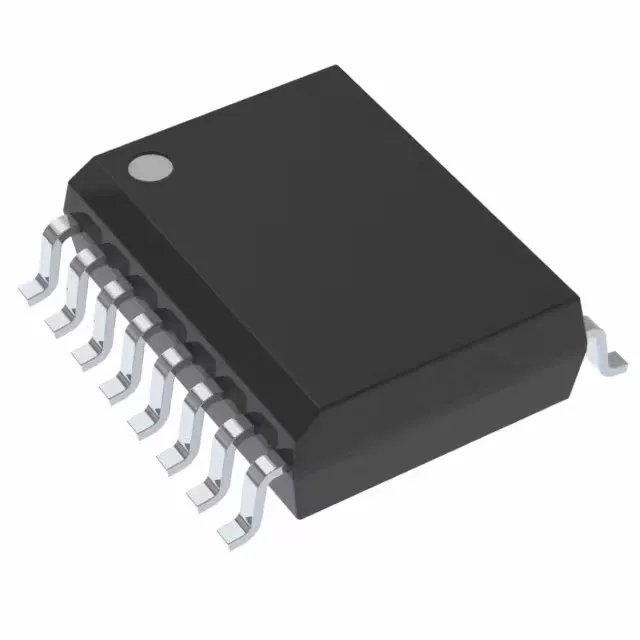
512 Mbit NOR flash in a 16-SOIC wide body
The S79FL512SDSMFBG01: It uses the SPI Quad I/O interface, which lets it read four bits per clock cycle at up to 80 MHz, giving a sustained read throughput that outruns a standard single-bit SPI bus. The surface-mount package reflows cleanly with standard lead-free profiles, and the wide body gives good thermal contact to the PCB for heat spreading during erase cycles.
Automotive temperature range and AEC-Q100 qualification
The AEC-Q100 Grade 1 qualification means it passed the full suite of automotive stress tests: high-temperature operating life, temperature cycling, ESD, and latch-up. The 80 MHz clock frequency is the maximum for Quad I/O reads; at lower voltages near 2.7V the maximum clock may be derated, but for a 3.3V supply the full 80 MHz is available.
Active production and sourcing posture
No official second-source or pin-compatible cross-reference is listed from the manufacturer. The FL-S series is Infineon's own automotive-grade NOR flash family; for a BOM hedge, the buyer should confirm the exact memory density and interface match at RFQ.
Rework and board-fit considerations
The 16-SOIC wide body has a 1.27 mm lead pitch, which is hand-reworkable with a hot-air station and fine-tip iron. The leads are visible for inspection and touch-up. No hidden pads or thermal pad underneath, so the part lifts cleanly without pad damage if the board is preheated to 100-120°C. Pin 1 is marked by a chamfer on the package body and a dot on the top surface. The wide body width (7.50 mm) means the footprint is larger than a narrow SOIC-8, so verify the PCB land pattern matches the 16-SOIC wide body before layout.