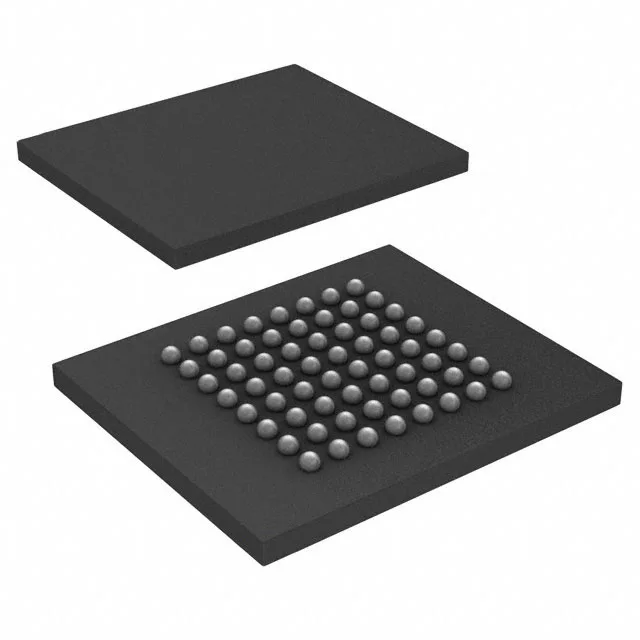
256 Mbit parallel NOR Flash in a 64-ball BGA
The Cypress S29GL256P90FFIR10 is a 256 Mbit parallel NOR Flash memory from the GL-P series, organized as 32M x 8 bits.
90 ns access time — bus timing margin
For a host controller running at, say, 50 MHz (20 ns period), a 90 ns read access means the controller must insert at least four wait states to meet the setup time. That is typical for parallel NOR Flash of this density; the trade-off is simpler interface logic versus the faster page-mode or burst reads available on some newer parts. If your design already uses a 100 ns or slower Flash, this part drops in with margin to spare.
256 Mbit density — firmware and data-logging headroom
256 Mbit (32 MB) is a common density for storing bootloaders, RTOS images, file systems, and configuration data in industrial and networking equipment. It provides enough room for a primary firmware image plus a fallback recovery image, or for several months of data-logging in a sensor node. The parallel interface means the host reads it like a memory-mapped device — no SPI command overhead — which simplifies firmware bring-up and reduces latency for random-access reads.
The 2.7V minimum supply gives headroom for a 3.3V rail that droops during cold-crank or brownout events. If your system sees sustained junction temperatures above 85°C, you would need to step up to the 105°C or 125°C rated variants in the GL family.
64-ball FBGA — layout and rework considerations
For rework, a hot-air profile with bottom-side preheat is standard; the 13x11 mm body is manageable with a standard rework station.
For dual-sourcing resilience, the GL-P series has pin-compatible siblings at other densities (128 Mbit, 512 Mbit) that share the same 64-ball FBGA footprint and interface, though the access time and supply voltage may differ — verify the specific variant before substituting.