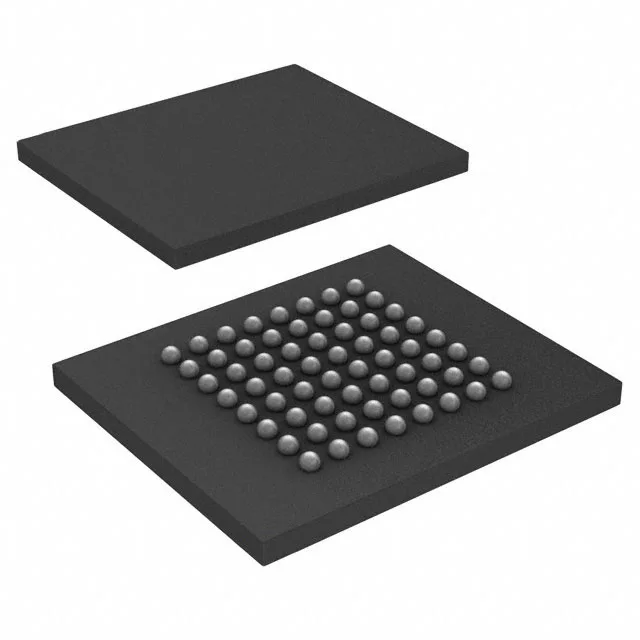
Parallel NOR Flash, 128 Mbit, 90 ns — the GL-P workhorse
This is the density and speed tier commonly found in embedded boot storage, FPGA configuration memory, and firmware-update banks in telecom line cards, industrial controllers, and networking gear — anywhere the board already has a parallel bus and needs a reliable, field-proven NOR Flash with a straightforward interface.
The 90 ns access time sets the read-cycle window for the host controller. If the existing design was timed for a 100 ns or 110 ns part, this one drops in with margin — the bus sees data valid sooner. Going the other way, swapping a faster 70 ns part for this 90 ns part might tighten hold times unless the controller has programmable wait states. The parallel interface is straightforward: address, data, chip-enable, output-enable, write-enable. No clock, no serial protocol overhead.
64-FBGA — not a field-swap part
The 64-FBGA (13x11 mm) package is a fine-pitch BGA. No socket option in this form factor — it gets reflow-soldered. If the board goes into a product that sees field repair, plan for a hot-air station or pre-heater for removal. The footprint is the standard 64-ball FBGA layout for this density; verify the ball pitch against the existing PCB land pattern before committing the BOM. The tray shipping medium means the parts arrive in a rigid carrier, not tape-and-reel, so the pick-and-place feeder setup needs a tray handler or a manual transfer to tape.
No end-of-life notice, no last-time-buy deadline to track.