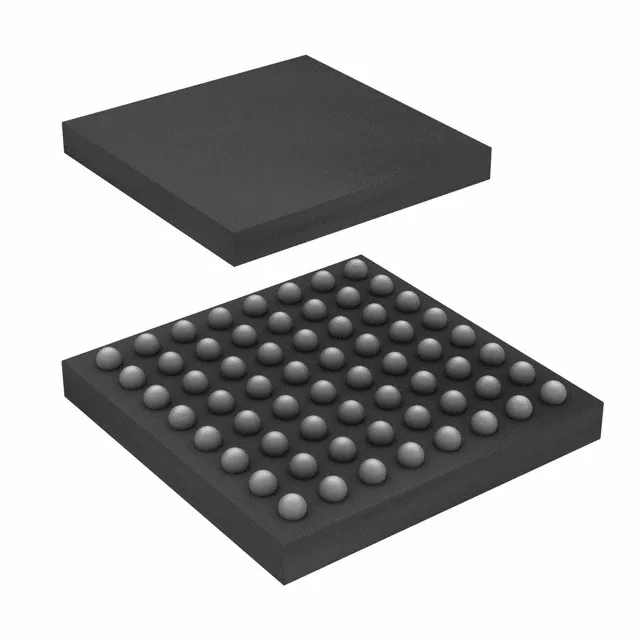
1 Gbit parallel NOR Flash for code-shadowing and data storage
The Infineon S29GL01GT11DHV023 is a 1 Gbit parallel NOR Flash memory from the GL-T series, organized as 128M x 8 bits. The parallel interface provides deterministic read latency that serial NOR Flash cannot match, which matters when the host controller fetches instructions or boots from external Flash without a cache.
110 ns access time — bus timing margin for the controller
For a 16-bit or 8-bit parallel bus running at moderate clock rates, this gives comfortable margin — the controller does not need to insert wait states for most asynchronous reads. Compare this to the S29GL128S10TFIV13 from the GL-S family, which specifies a 100 ns access time but operates from a 1.65 V supply, not the 2.7 V to 3.6 V range of this part. The S29GL01GT11DHV023 is the higher-voltage, wider-temperature option for designs that need the full industrial temperature range and a single 3.3 V rail.
Active lifecycle — no end-of-life planning needed
The GL-T series is the current production family, so supply continuity is the normal factory cycle.
64-FBGA (9x9) — PCB layout and rework considerations
The BGA footprint requires a via-in-pad or microvia fan-out strategy for the address and data lines. The 64-ball array is manageable with a standard hot-air rework station, though X-ray inspection after reflow is recommended to check for solder bridging under the center balls.
Write-cycle timing and page-mode support
The write cycle time is 60 ns per word or page, which is the programming pulse width for a single write operation. This part supports page-mode programming — a feature that lets the host write a burst of data (typically 256 or 512 bytes) with a single command sequence, reducing the per-byte programming overhead. Page mode is standard on the GL-T series and is enabled through the command register interface. For firmware updates or data logging, page-mode writes cut the total programming time significantly compared to word-by-word programming.