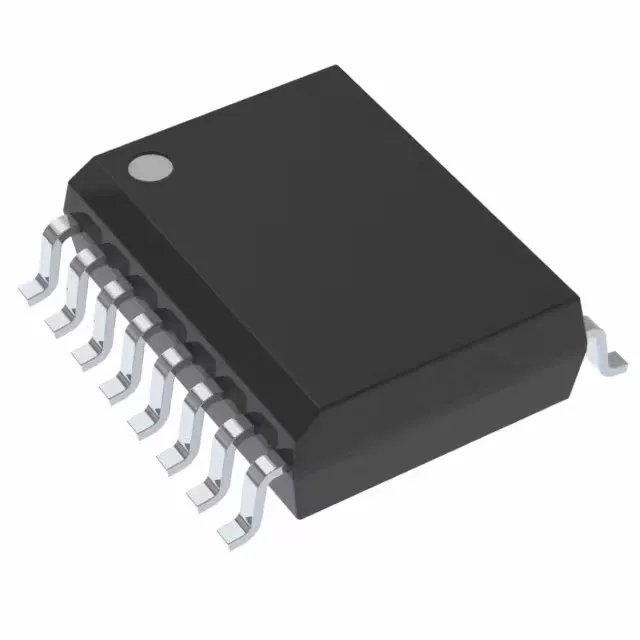
Typical applications include code shadowing, firmware storage, configuration data, and data logging in embedded systems, industrial controllers, networking equipment, and automotive electronics where reliable non-volatile storage is required.
133 MHz clock — read throughput for XIP and fast boot
The 133 MHz SPI clock is the headline performance spec. In Quad I/O mode, the effective read throughput approaches 532 Mbps (133 MHz x 4 data lines), which is fast enough to support eXecute-In-Place (XIP) from NOR Flash without a separate DRAM cache for many microcontroller and FPGA boot images. For firmware-over-air (FOTA) staging, the write performance at this clock rate also reduces the update window. The 512 Mbit density provides 64 MB of storage — enough for multiple firmware images, a root filesystem, and configuration blocks with wear-leveling headroom.
Industrial temperature grade — outdoor and under-hood ready
The 105°C upper limit covers most automotive cabin and chassis applications without requiring a full AEC-Q100 part. If your design sees sustained junction temperatures above 105°C, you would need to step to a higher-temperature grade — but for the vast majority of industrial and automotive embedded designs, this range is sufficient.
Housed in a 16-pin SOIC package with a 7.50 mm body width (0.295"), this is a standard wide-body SOIC footprint. The package is surface-mount and compatible with reflow soldering. No exposed pad or thermal slug — the part's power dissipation is modest enough for the plastic SOIC without additional thermal management. The shipping medium is Tray, which is typical for volume production; if you need Tape & Reel for automated pick-and-place, verify the reel option with your distributor at quote time.