Automotive-grade NOR Flash for code-shadowing and data logging
The S25FL512SAGMFA011: It uses a Quad I/O SPI interface running at 133 MHz, which gives enough read throughput to support execute-in-place (XIP) code shadowing from the Flash to an MCU or SoC without a separate parallel NOR device.
512 Mbit organized as 64 M x 8 gives enough room for a full firmware image plus a redundant backup slot for over-the-air updates, plus calibration tables and log buffers. The 133 MHz Quad SPI clock rate translates to roughly 66 MB/s read throughput in quad mode — fast enough to feed a Cortex-M7 or -R5 core executing from external Flash without stalling on instruction fetches. If your application needs more than 512 Mbit, the FL-S family scales up to 1 Gbit in the same 16-SOIC footprint, but the S25FL512SAGMFA011 is the density sweet spot for most mid-range automotive ECUs.
It is not rated for under-hood or engine-bay environments where ambient exceeds 85°C. For designs requiring -40°C to 125°C, look at the FL-S family's Grade 1 variants (S25FL512SAGMFI011 is one example).
Package and PCB layout — 16-SOIC wide-body
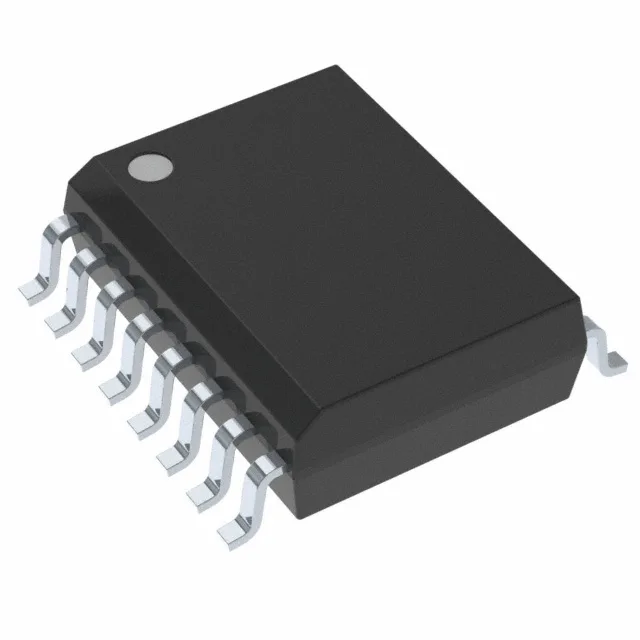
The 16-SOIC package uses the 7.50 mm body width (300 mil), not the more common 3.90 mm narrow SOIC-16. If your board has a footprint for a standard narrow SOIC-16, you will need a layout change — the wide body has a different pad row spacing. The package is surface-mount only.