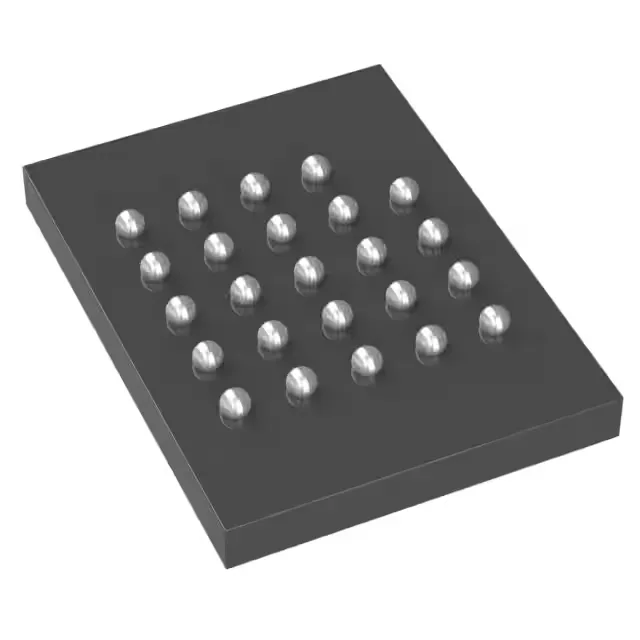
It communicates over a Quad I/O SPI interface at up to 80 MHz, which gives you four times the read throughput of a standard SPI bus — useful for fast code shadowing or execute-in-place (XIP) in embedded systems.
80 MHz Quad SPI — what the clock rate means for throughput
At 80 MHz in Quad I/O mode, the S25FL256SDSBHI210 can sustain read throughput well above 300 Mbps, depending on the command overhead and bus turnaround. That is fast enough to feed a Cortex-M or RISC-V core directly from Flash without a separate RAM shadow, provided your MCU's SPI controller supports Quad mode. If you are used to standard SPI at 40 MHz, this part cuts firmware load time by roughly a factor of four on the same clock — a real difference when reducing boot time or streaming calibration tables.
24-ball BGA — board-level fit
It is not a hand-solderable package — plan for a pick-and-place line with stencil printing. The tray shipping medium means the parts are loose in a tray, not taped; if your line feeds from tape, you will need a tray-to-tape conversion step.
The FL-S series is a mature, widely used family, so supply through franchised and independent channels is stable.