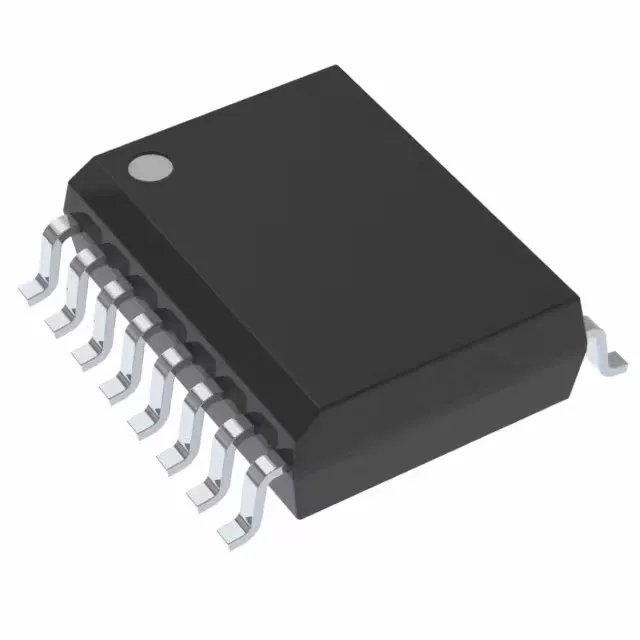
Active production — what it means for the BOM line
The S25FL256SAGMFIG13: The base product number S25FL256 anchors the FL-S series, Infineon's mainstream NOR flash family that supports Quad I/O at 133 MHz — the same interface and speed grade used across multiple density variants, so a BOM change to a 128 Mbit or 512 Mbit sibling keeps the same PCB footprint and SPI command set.
256 Mbit NOR flash — density and interface for code storage
Organized as 32 M x 8 bits, the 256 Mbit density holds a full Linux kernel or a multi-megabyte firmware image with room for a redundant bootloader. The NOR architecture supports execute-in-place (XIP), so the CPU can read instructions directly from the flash without copying to RAM — useful for deterministic boot sequences where DRAM initialization depends on flash content. The SPI Quad I/O interface at 133 MHz delivers a theoretical read throughput of 532 Mbit/s in quad mode — four data lines per clock cycle. This is the ceiling for code shadowing: the flash can fill a 64 KB cache in under 1 ms at that rate, assuming the host controller keeps the command pipeline full.
No separate 1.8 V core supply is needed, simplifying the power tree.
Temperature grade and deployment context
The 85°C ceiling covers the interior of a sealed IP65 enclosure on a summer day; for 105°C or 125°C applications, a different temperature grade variant from the FL-S family would be needed. The Tape & Reel packaging suits automated pick-and-place assembly — the reel quantity is the standard for high-volume SMT lines. For prototype runs, cut-tape or tube options may be available through distribution, but the TR suffix on this order code indicates reel delivery as the default.