It communicates over an SPI bus with Quad I/O and QPI support, which means the interface can shift four data bits per clock cycle instead of the single bit a standard SPI line carries. At the 66 MHz clock rate, that translates to a practical read throughput that keeps a Cortex-M class MCU fed without stalling for code fetch — useful when the MCU's internal Flash is too small or you need field-updatable firmware stored on a separate serial memory. No extended-temperature or automotive-grade variant here — this is the industrial-tier part.
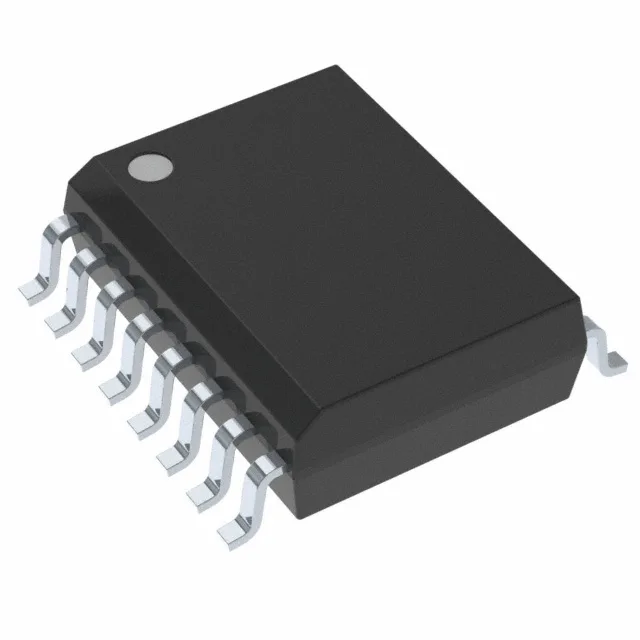
16-SOIC footprint — board-level fit
The 16-pin SOIC footprint is common across many serial NOR Flash parts in the 256 Mbit density class, which simplifies layout if you are qualifying a second source or swapping in a different vendor's part during allocation.