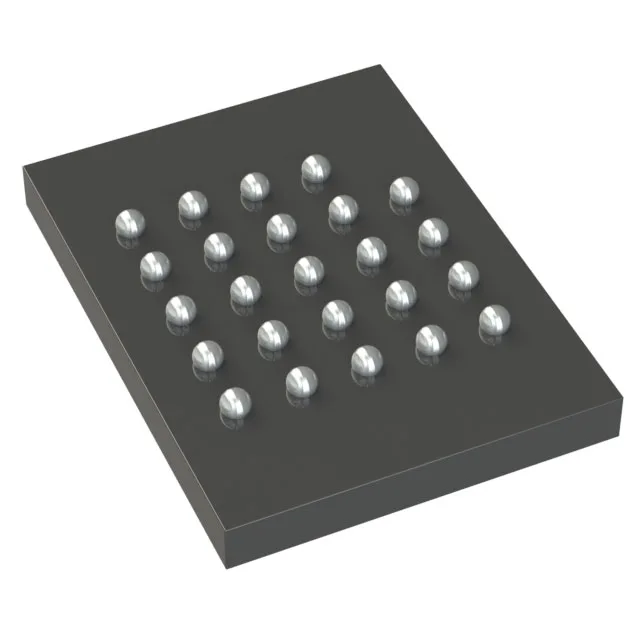
It uses a SPI interface with Quad I/O and QPI support, clocked at 66 MHz. The 24-BGA package (8x6 mm) keeps the footprint small, but it is a reflow-only device — not something you swap in the field with a soldering iron.
The Quad I/O interface lets you read four bits per clock cycle, so at 66 MHz the effective throughput is roughly 33 MB/s. That is enough to shadow a firmware image from flash to RAM without stalling the CPU, or to stream configuration data for an FPGA. The QPI mode reduces the command overhead by using the same four lines for address and data, which helps when you are doing random reads. If your MCU or SoC only supports standard SPI, the part still works — you just lose the speed advantage.
Temperature range and package — design-in notes
The 24-BGA (8x6 mm) package is a 0.8 mm pitch ball grid array — you need a reflow oven and X-ray inspection to verify solder joints. It is not a field-replaceable part; plan for it to be soldered down for the life of the product.