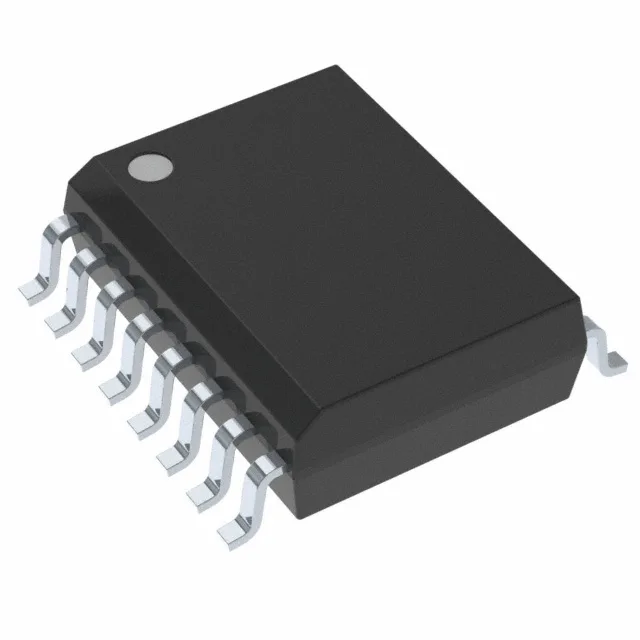
256 Mbit NOR flash for automotive code storage
The S25FL256LAGMFB000 is a 256 Mbit NOR flash from Infineon's FL-L series, organized as 32M × 8 bits and accessed over an SPI Quad I/O or QPI interface at up to 133 MHz. This density suits code-shadowing for a single-core MCU boot image or a moderate-size data-logging buffer in an automotive ECU. AEC-Q100 Grade 1 qualification means the device is characterized and guaranteed over the -40 to +105 °C ambient temperature range — the full under-hood and cabin thermal envelope for passenger vehicles and light trucks. The 2.7-3.6 V supply rail matches the common 3.3 V automotive power domain without an external regulator.
What the 133 MHz Quad I/O bus means for throughput
The SPI Quad I/O interface at 133 MHz delivers a theoretical peak read throughput of 532 Mbit/s (four data lines × 133 MHz). In practice, the sustained rate depends on the command overhead and the initial access latency, but this clock speed puts the device in the high-performance tier for NOR flash — fast enough to support execute-in-place (XIP) for a real-time boot sequence without copying the image to RAM first. The QPI (Quad Peripheral Interface) mode reduces the command byte to a single serial cycle, cutting protocol overhead on short random reads. For a firmware-over-the-air (FOTA) update routine that reads many small sectors, QPI can improve effective throughput by 15-25 % compared to standard Quad I/O command sequences.
This NOR flash is suitable for both new design-ins and production replenishment without a looming obsolescence risk.