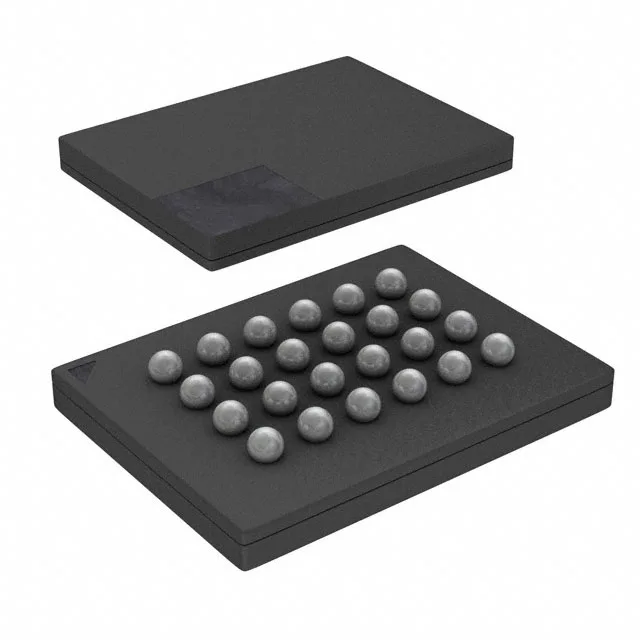
256 Mbit NOR Flash in a 24-BGA — what it is
Packaged in a 24-ball TBGA with a 6x8 mm footprint, it is a surface-mount device intended for reflow soldering. The Tray shipping medium indicates it is typically handled in low-to-medium volume production or prototyping.
Obsolete — plan your BOM accordingly
This means Infineon has discontinued production and no further last-time-buy windows are active. For ongoing production, you will need to source from independent distribution or qualify a replacement. When sourcing through independent channels, verify date-code authenticity and that the parts have not been exposed to moisture beyond their MSL rating — a common issue with BGA packages from surplus stock. If you are evaluating a drop-in replacement, look for other 256 Mbit NOR Flash devices in the same 24-BGA (6x8 mm) footprint with Quad SPI at 133 MHz. The FL-L series had multiple density and voltage variants; cross-reference the base product number S25FL256 to find sibling parts that may still be active.
133 MHz Quad SPI — bus margin and throughput
The 133 MHz clock rate with Quad I/O yields a theoretical read throughput of 532 Mbps (133 MHz x 4 data lines). In practice, the SPI controller overhead and command overhead reduce this, but it still provides fast code execution-in-place (XIP) for microcontrollers that support Quad SPI memory-mapped mode. For a firmware bring-up engineer: ensure the host MCU's Quad SPI controller can drive the 133 MHz clock with adequate signal integrity across the PCB traces. The 24-BGA package's ball pitch is tight — keep the SPI clock trace length matched and impedance-controlled to avoid hold-time violations at speed.
BGA rework and moisture sensitivity
The 24-ball TBGA (6x8 mm) requires a reflow profile consistent with JEDEC standards for BGA packages. If the parts have been in storage beyond the floor-life window indicated on the moisture barrier bag, a bake-out at 125°C for 48 hours is necessary before reflow to prevent popcorning. For the rework lab tech: use a hot-air nozzle that covers the entire BGA body without overheating adjacent components. Pre-heat the board to 100-110°C to reduce thermal shock. After reballing, verify ball coplanarity with a shadow moiré system if available.