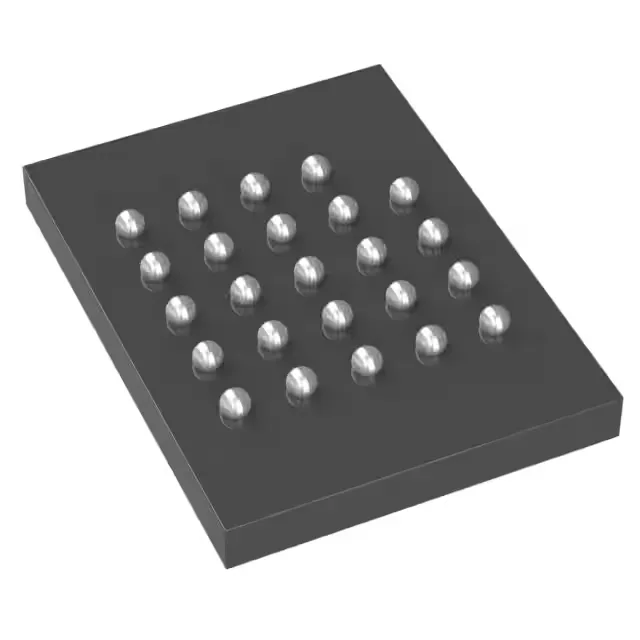
The S25FL132K0XBHB023: For existing BOM positions, this part is sourced through independent distribution channels — quantities are lot-specific and confirmed at RFQ. No pin-compatible drop-in replacement is documented; a board-level qualification cycle is required for any alternative.
32 Mbit SPI Quad-I/O NOR — read throughput and firmware execution
The S25FL132K0XBHB023 is a 32 Mbit (4M x 8) NOR flash with a SPI Quad-I/O interface clocked at 108 MHz. The quad-I/O read mode delivers a sustained throughput of roughly 54 MB/s — enough to support execute-in-place (XIP) for a Cortex-M class MCU without a separate RAM shadow. The 3 ms page write cycle sets the floor for firmware update time: a full 32 Mbit erase-and-rewrite cycle runs several seconds, so the OTA or field-update budget must account for this latency.
Automotive temperature grade and AEC-Q100 qualification
The AEC-Q100 FL1-K series designation means it has passed the stress tests (preconditioning, temperature cycling, HAST, high-temperature storage) required for automotive-grade ICs.
24-TBGA 8x6 mm — board-level footprint and rework
Housed in a 24-ball TBGA measuring 8 mm x 6 mm, the package requires a controlled reflow profile — the 0.8 mm ball pitch is fine enough that a misaligned stencil or excessive peak temperature can cause head-in-pillow defects. The tape-and-reel delivery suits automated pick-and-place for volume assembly.