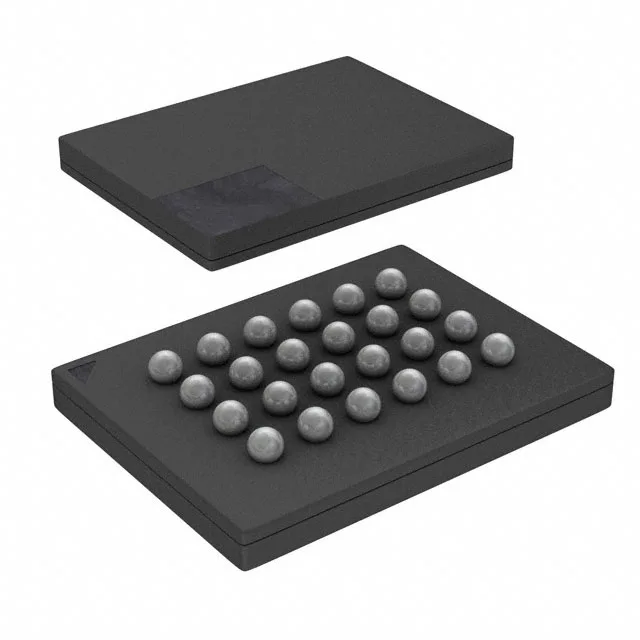
That means Cypress (now Infineon) has stopped manufacturing it; there is no last-time-buy window left. For new designs or volume production, you will want a pin-compatible replacement — see the FAQ for the closest family alternative.
That is fast enough to feed a Cortex-M or entry-level application processor without stalling on instruction fetches, as long as the layout keeps the SPI trace length short and the decoupling tight around the 24-ball BGA. The 5 µs word write time and 3 ms page write time are typical for this NOR generation — fine for firmware updates over a slow link, but not for high-frequency data logging.
24-ball BGA — rework bench notes
The 24-TBGA package measures 6 x 8 mm with a 0.8 mm ball pitch. That pitch is hand-reworkable with a decent hot-air station and a stencil, but the BGA needs a bake at 125°C for 24 hours if the moisture-barrier bag has been open longer than the floor-life window — MSL 3 is typical for this package class. The 24-ball footprint saves board area versus an SOIC-16, but you lose the ability to probe signals easily; bring out the SPI lines to test pads if the board goes through a repair loop.