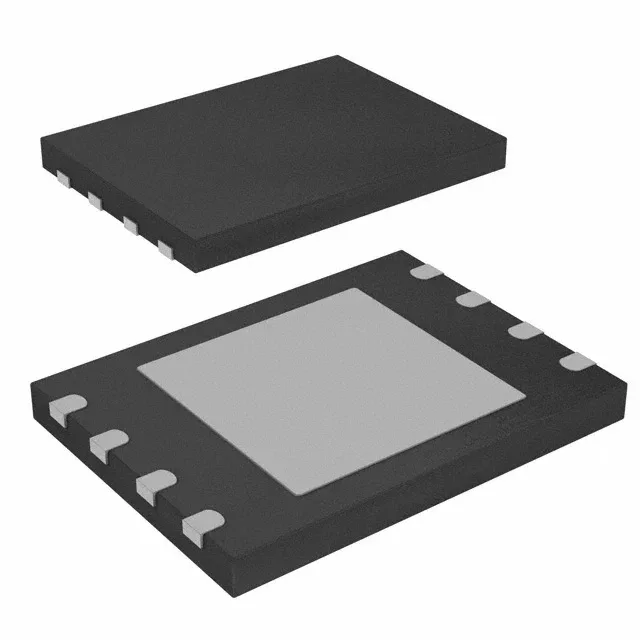
It communicates over a Quad SPI interface at up to 133 MHz, which in Quad I/O mode delivers enough read bandwidth to feed a high-resolution display buffer or support fast firmware shadowing to RAM.
The 133 MHz clock rate is the practical ceiling for this part's SPI bus. In Quad I/O mode, a single read command can transfer four bits per clock cycle, so the effective throughput is well above what a standard single-bit SPI at the same frequency can manage. That matters when the host MCU or FPGA needs to execute code-in-place or stream large lookup tables without wait states. The flash wait-state count must be set correctly in the memory controller for 133 MHz operation — at lower frequencies the margin relaxes, but the full speed requires the controller to support the Quad I/O protocol natively.
Industrial temperature range — deployment envelope
The 8-WSON package's exposed pad helps pull heat from the die to the PCB copper plane, which matters when the part is running sustained read bursts at 133 MHz in a warm enclosure. The storage temperature range exceeds the operating range, but the operating limit governs the system's ambient spec.
The FL-S series is a mature, widely deployed NOR Flash family, and Cypress (now Infineon) continues to support it. ROHS3 compliant. No official successor has been published because the part is not being phased out.