It speaks SPI with Quad I/O, meaning it can shift four bits per clock cycle instead of one — useful for faster firmware reads or execute-in-place (XIP) without tying up a parallel bus. The 133 MHz clock rate gives a theoretical throughput edge over older single-SPI parts, though real-world gain depends on the controller's Quad SPI peripheral and board layout.
Package and footprint — what you need to know for layout
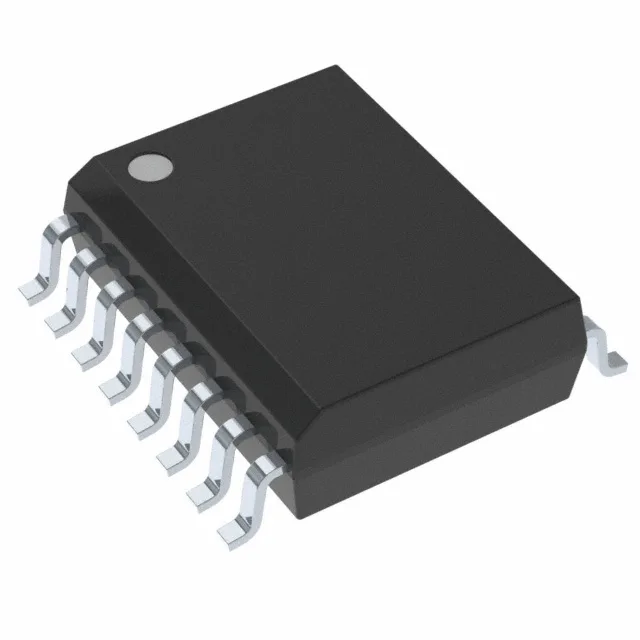
Housed in a 16-pin SOIC with 7.50 mm body width (the 0.295-inch wide version), surface-mount only. The 16-SOIC is a common footprint for NOR Flash — same as many 128 Mbit and 256 Mbit parts from other vendors — so a layout swap between suppliers is often a straight drop-in.
Where it fits in a design
Typical use cases: code storage for a microcontroller or SoC that boots from SPI NOR, configuration data for an FPGA, or firmware-over-the-air staging area. The 128 Mbit capacity is a common sweet spot — enough for a full Linux kernel or a hefty application image, without the cost jump to 256 Mbit or 512 Mbit parts.