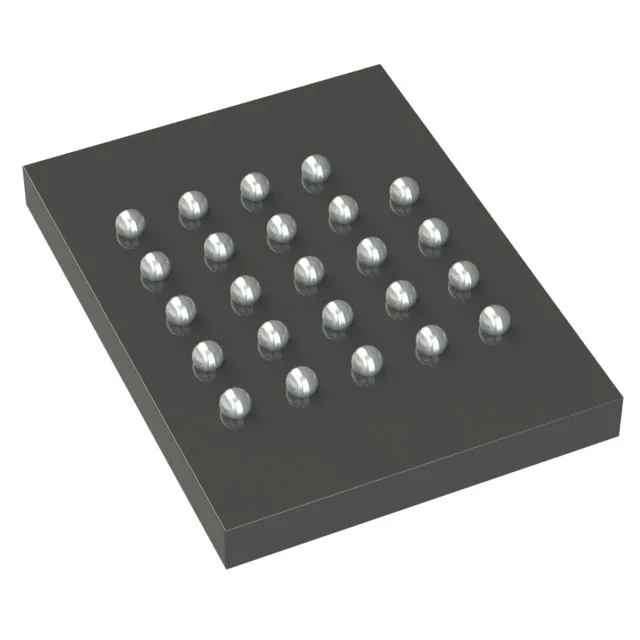
128 Mbit NOR Flash in a 24-BGA — code storage for industrial embedded
It uses the SPI bus with Quad I/O and QPI support, clocked at 66 MHz. This density and interface fit code shadowing, firmware storage, and execute-in-place (XIP) in systems that need fast random access and high reliability. Surface-mount only.
66 MHz Quad SPI — read throughput for fast boot
That is fast enough for loading a compressed kernel or FPGA bitstream directly from Flash without an intermediate SRAM staging buffer. For code shadowing, it keeps the copy time short enough to meet cold-boot targets in networking gear and industrial controllers. The SPI interface supports both Quad I/O and QPI (Quad Peripheral Interface) protocols. QPI uses all four data lines for command, address, and data, reducing instruction overhead on random reads — useful when the MCU or FPGA does not have a dedicated Quad I/O controller and needs to toggle the command byte on a single line.
It qualifies for new design-ins and volume production without a forced-migration timeline.
24-BGA (8x6 mm) — footprint and assembly
The 24-ball TBGA package (8 x 6 mm body) uses a 1.0 mm ball pitch typical for this density. The small footprint suits space-constrained PCBs, but the BGA requires a multi-layer board with microvias or blind vias to route the SPI signals and power. Stencil design and reflow profile must follow Infineon's recommended solder paste coverage — underfill is not mandatory for most industrial temperature cycles, but a conformal coat may be needed if the assembly sees condensation.