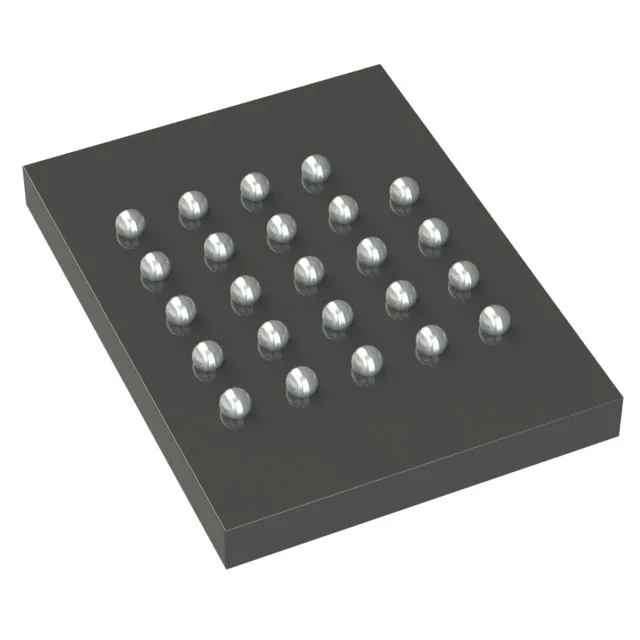
What this 64 Mbit NOR Flash brings to the board
108 MHz Quad-SPI — what that clock buys you
At 108 MHz the Quad-SPI interface can deliver sustained read throughput north of 50 MB/s in quad-output mode. That is enough to stream a compressed firmware image from Flash into RAM for OTA updates without stalling the application. The QPI mode reduces the command overhead to a single byte, which tightens the latency on random reads — useful when the MCU is fetching scattered lookup tables or calibration constants.
Industrial temperature range and the 24-BGA footprint
The 24-ball BGA (8x6 mm body) keeps the PCB footprint small — about the area of an SOIC-8 — but the hidden balls mean you need X-ray inspection after reflow. The BGA is MSL 3 out of the bag; if the moisture barrier pouch has been open longer than the floor-life window, bake the parts at 125°C for 48 hours before reflow to avoid popcorning. A 0.8 mm ball pitch leaves room for a single via between balls on a 4-layer board, but keep the decoupling caps within 3 mm of the VDD balls.
The FL-L series is a mature, broadly second-sourced NOR Flash family, so supply risk is low.