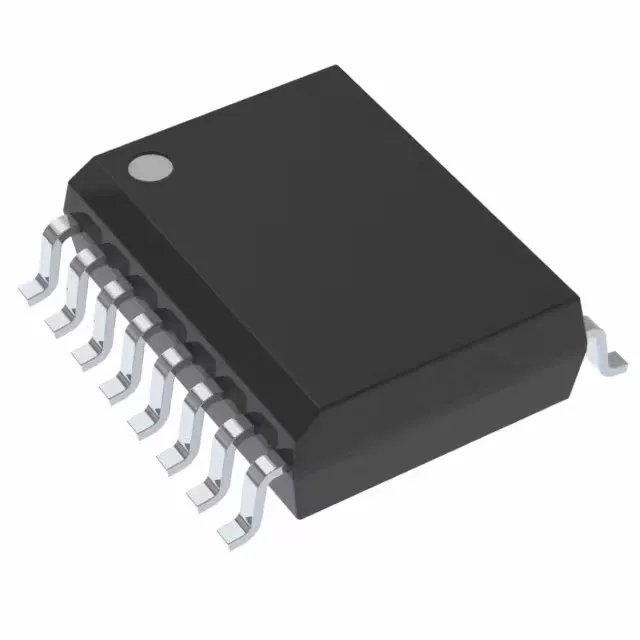
32 Mbit NOR flash for automotive firmware storage
It supports Quad I/O SPI at up to 104 MHz, delivering the read throughput needed for fast boot and over-the-air update staging in engine control, ADAS, and body electronics modules.
Obsolete — time to secure last-time or alternate supply
This exact order code carries an obsolete lifecycle status. No new factory orders will be accepted; the only available stock is from independent distribution and surplus channel inventory. The 5 µs word-program and 3 ms page-write cycle times remain competitive for parameter storage, but the clock is running on fresh supply.
What 104 MHz Quad-SPI means for your boot and update budget
At 104 MHz in Quad I/O mode, this part can sustain read throughput sufficient to shadow a small firmware image into RAM without stalling the core. For a 32 Mbit (4 MB) device, a full read at that clock rate takes under 40 ms — fast enough for a seamless boot in automotive ECUs. The 4 KB and 64 KB erase granularity typical of the FL-P family matters when sizing the OTA staging area: the 64 KB sector erase (3 ms typical) is the budget unit for large updates, while 4 KB parameter sectors let you preserve calibration data without a full erase cycle.
AEC-Q100 and temperature grade: where it survives
If your design requires 105°C or 125°C operation (e.g., engine bay or transmission), you need a different temperature grade variant — the S25FL032P0XMFI003, for example, carries the same density and package but with the industrial temperature range.
Package and footprint: 16-SOIC wide-body
The same pad layout works for the S25FL032P0XMFI003 (industrial temp) and several higher-density siblings, making it a practical choice for a multi-density PCB layout. The Tape & Reel (TR) packaging is standard for automated pick-and-place; if you need tube or tray, the same die in a different pack option may be available.