60 V, 240 A — the power-handling tier this part sits in
The IRLS3036TRL7PP: This is a high-current, low-voltage switch aimed at applications like synchronous rectification, DC-DC converters, motor-drive output stages, and battery protection circuits where the load pulls well into the hundreds of amps.
1.9 mOhm Rds(on) — what the on-resistance means for the BOM
That 1.9 mOhm figure is specified at 25°C junction temperature; the actual Rds(on) roughly doubles at 175°C junction, so a designer sizing the thermal path needs to budget for about 3.8 mOhm at the hot end.
Total gate charge is 160 nC at 4.5 V Vgs. The input capacitance is 11270 pF at 50 V Vds. The ±16 V maximum gate-source rating provides margin for gate-drive overshoot.
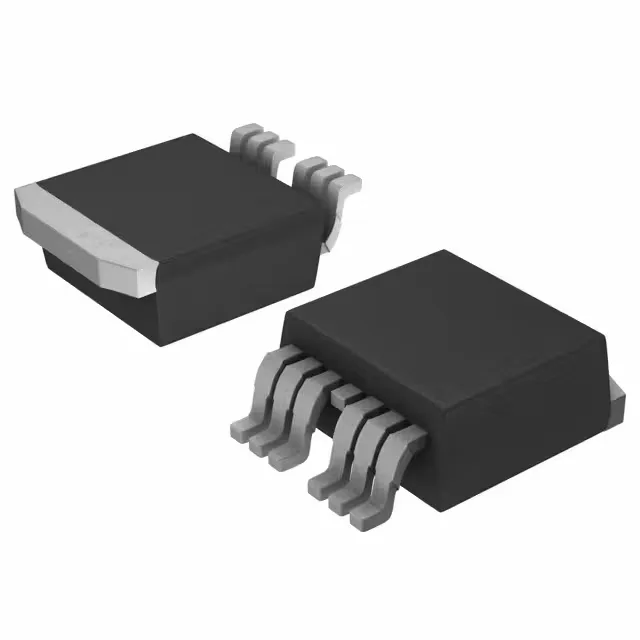
D2PAK-7 — package and footprint reality
The IRLS3036TRL7PP comes in a D2PAK-7 (TO-263-7) surface-mount package with six leads plus the exposed tab. The 7-lead variant gives an extra source connection compared to the standard 3-lead D2PAK, which reduces package resistance and improves current sharing across the bond wires. Reflow profile follows standard lead-free solder processes; the part is ROHS3 compliant.
The 175°C ceiling is common among automotive-grade power MOSFETs and gives thermal headroom above the 150°C typical of standard industrial parts.