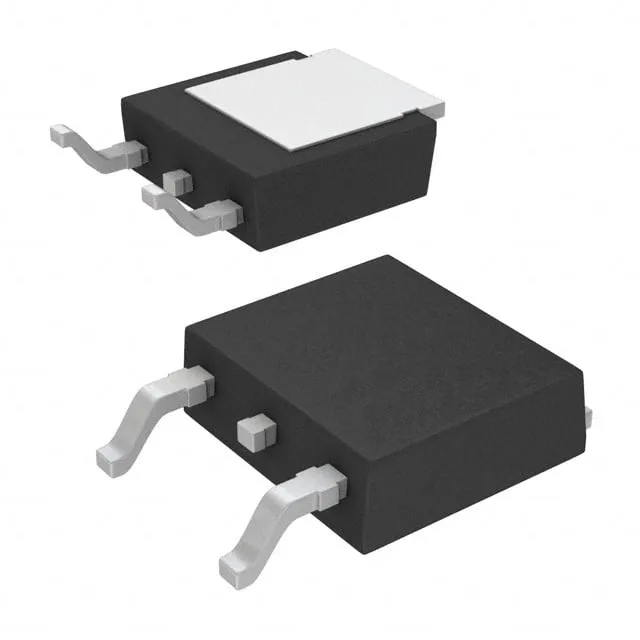
200V, 17A N-Channel — what the drain rating means on your rail
The IRFR15N20DTRPBF: That 200 V Vdss gives you a solid margin on a 48 V or 72 V bus, and it will handle the peak voltage on a 120 V DC link in a motor drive without derating anxiety.
165 mOhm on-resistance — sizing the conduction loss
Maximum Rds(on) is 165 mOhm with 10 V gate drive at 10 A drain current. At 10 A the conduction loss is 16.5 W — that number drives the heatsink decision. The 140 W maximum power dissipation at the case (Tc) tells you the package can shed that heat if the board copper and airflow are adequate, but the 3 W at ambient (Ta) is a reminder: without a heatsink you are limited to light loads.
Gate charge and switching speed
Total gate charge at 10 V is 41 nC. For a 100 kHz hard-switched converter, that gate charge draws 4.1 mA from the driver — well within a standard gate-driver IC's capability. The 910 pF input capacitance at 25 V drain bias gives a rough handle on the Miller plateau; expect a few tens of nanoseconds rise time with a proper totem-pole driver.
Package and thermal path
Housed in the D-PAK (TO-252AA) surface-mount package, the IRFR15N20DTRPBF uses the centre tab as the drain connection — the PCB copper area under that tab is the primary thermal path. The -55 °C to 175 °C junction range covers military and industrial extremes; the 175 °C ceiling is a genuine advantage over 150 °C-rated parts in high-ambient environments like engine bays or downhole tools.
