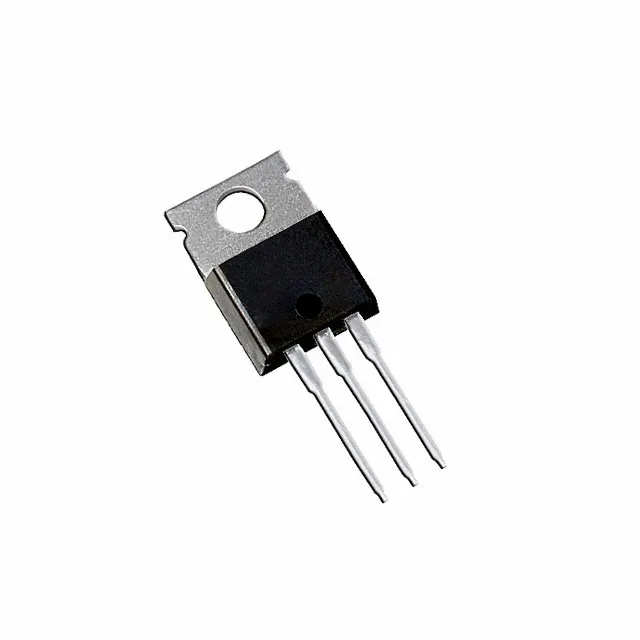
60 V, 120 A N-channel HEXFET in TO-220
The IRFB3206PBF: It comes in a TO-220-3 through-hole package, the standard footprint for medium-power through-hole designs — motor drives, DC-DC converters, battery protection, and synchronous rectification stages.
3 mOhm Rds(on) — what it means for conduction loss
At 75 A the conduction loss is I²R = 16.9 W — that is the floor the heatsink must pull away.
Total gate charge is 170 nC at 10 V. Input capacitance Ciss is 6540 pF at 50 V Vds, which sets the driver's turn-on delay.
Junction temperature range is -55°C to 175°C — a full military-temperature-span rating that suits avionics, down-hole tools, and under-hood automotive environments where ambient can exceed 125°C. The TO-220AB package (TO-220-3 variant) has a metal tab that carries the drain; the tab must be electrically isolated or tied to the drain rail. Maximum power dissipation is 300 W at case temperature — that figure assumes an infinite heatsink; real-world derating follows the thermal resistance junction-to-case.