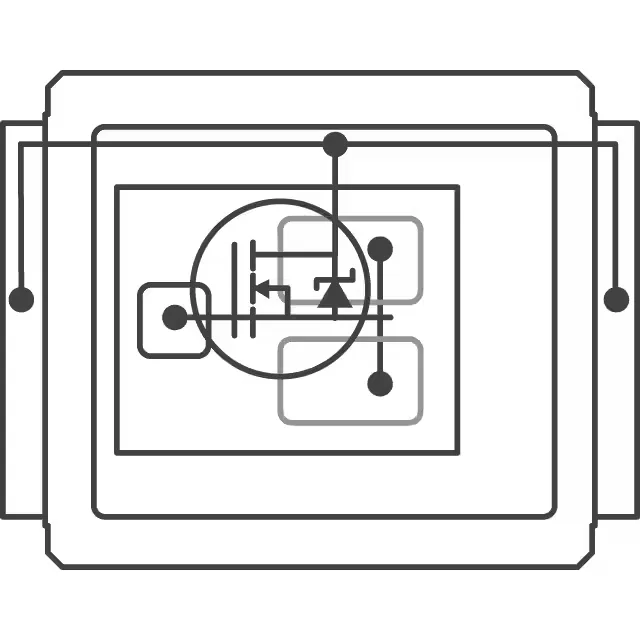
150 V, 4.9 A N-channel in a DirectFET can
It is built on the HEXFET trench technology and comes in the DirectFET Isometric MZ package — a can-style, solderable-top-side package that pulls heat through the board and the top-side heatsink pad simultaneously.
56 mOhm on-resistance — the conduction loss number
Maximum Rds(on) is 56 mOhm at Vgs = 10 V and Id = 5.6 A. This is the figure to use for worst-case conduction loss in a 48 V or 72 V bus converter, a secondary-side synchronous rectifier, or a load switch in a 120 V intermediate bus. Gate charge is 36 nC max at Vgs = 10 V. This is a moderate figure — it allows switching in the 100–200 kHz range with a standard driver without excessive gate-drive losses. Input capacitance Ciss is 1411 pF at Vds = 25 V, which sets the driver's peak current requirement during the Miller plateau.
DirectFET package — rework and thermal reality
The DirectFET Isometric MZ is a leadless, can-style package with a large solderable pad on the bottom and a flat metal top. The bottom pad is the drain connection; the source and gate are on the same bottom face as small pads. This package needs a well-designed PCB footprint with thermal vias under the drain pad to pull heat to inner copper planes. The top-side metal can also be heatsunk — a thermal pad or small heatsink on the can drops junction-to-ambient thermal resistance significantly. Reworking a DirectFET is different from a standard SO-8 or DPAK. The large bottom pad wicks solder quickly; a hot-air station with a focused nozzle and a preheat plate is the safe approach. The top-side can is a good visual indicator of the reflow — when the solder under the pad collapses, the can settles flush against the board. No pins to bend, but the pad alignment must be precise; the part self-centers only slightly during reflow. Moisture sensitivity level should be confirmed from the latest Infineon packing label before bake.
It is ROHS3 compliant.