600 V, 25 A — the power switch for a 400 V bus
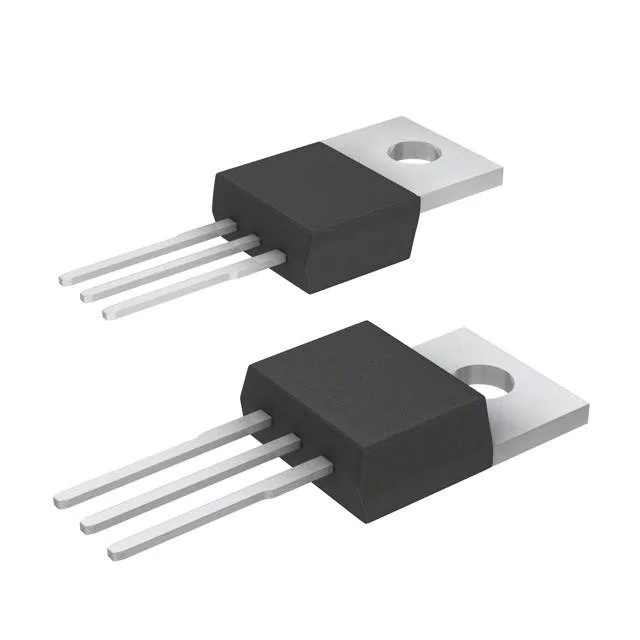
It comes in a through-hole PG-TO220-3 package, the standard three-lead power tab that bolts directly to a heatsink or chassis. This is the kind of part a designer reaches for when they need a hard-switching transistor for a 400 V DC bus — think power factor correction stages, flyback converters, or two-switch forward topologies in industrial power supplies.
The maximum on-resistance is 90 mOhm, specified at a drain current of 11.4 A and a gate drive of 10 V. That 11.4 A test point is roughly half the rated current — a realistic operating point for many designs, so the Rds(on) number is directly usable for loss budgeting without derating. The gate threshold voltage maxes out at 4.5 V at 570 µA, meaning a 10 V gate drive rail is needed to fully enhance the channel and hit that 90 mOhm floor. A 5 V logic-level drive from a microcontroller won't cut it — this part expects a proper gate driver with a 10 V supply.
51 nC gate charge — switching loss and driver sizing
Total gate charge is 51 nC at Vgs = 10 V. The input capacitance Ciss is 2103 pF at Vds = 400 V, which gives a rough idea of the Miller plateau charge. The 51 nC Qg figure is the one to use for driver selection and switching loss estimation; at 100 kHz and 10 V drive, the gate drive power is about 0.5 W, easily handled by a TO-220 driver with a small heatsink.
Through-hole TO-220 — reworkable and heatsink-friendly
The PG-TO220-3 package is a through-hole part with a metal tab. It bolts to a heatsink with a screw and a shoulder washer — no soldering a large pad to a PCB copper pour. The maximum power dissipation is 125 W at case temperature, so thermal management is non-negotiable. For a rework tech, this is one of the easier packages: the leads are thick enough to survive a couple of desoldering cycles, and the tab gives you something to grab with a heatsink clip while you work the joints.
The part is ROHS3 compliant.