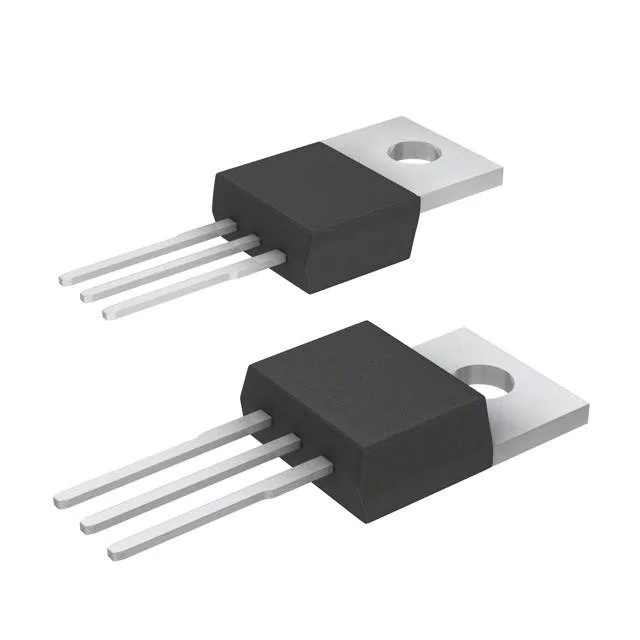
The 4.8 mOhm maximum on-resistance at Vgs=10 V and 100 A sets the conduction loss floor — at full current the I²R dissipation is roughly 48 W before the junction temperature rise is factored in. The TO-220-3 through-hole package (PG-TO220-3-1) keeps the thermal path to the heatsink short, with a 300 W case-temperature power dissipation ceiling that assumes an adequate thermal interface.
Gate drive and switching — sizing the driver for 182 nC Qg
Total gate charge at 10 V drive is 182 nC — a 60 nC gate at 100 kHz draws 6 mA from the driver; this part at the same frequency needs about 18 mA average drive current. The input capacitance (Ciss) of 12000 pF at 60 V Vds means the driver must source and sink peak currents in the 2–4 A range to keep switching transitions under 100 ns. The ±20 V maximum gate rating provides margin for overshoot on long gate-drive traces in high-side configurations.
175°C junction — where the temperature margin matters
This matters in under-hood automotive, high-ambient industrial enclosures, or motor-drive applications where the heatsink temperature runs near 100°C and the junction needs headroom for transient overloads.
ROHS3 compliance is confirmed.