Gate charge and switching — 44 nC at 10 V
Total gate charge is 44 nC at 10 V. The 3375 pF input capacitance at 30 V drain-source gives a rough Miller-plateau charge that a designer can use to estimate switching losses in a hard-switched topology.
Thermal budget — 107 W at the case
The device is rated for 107 W power dissipation at the case temperature (Tc) and 3 W in free air at 25 °C ambient.
Package and mounting — through-hole TO-220-3
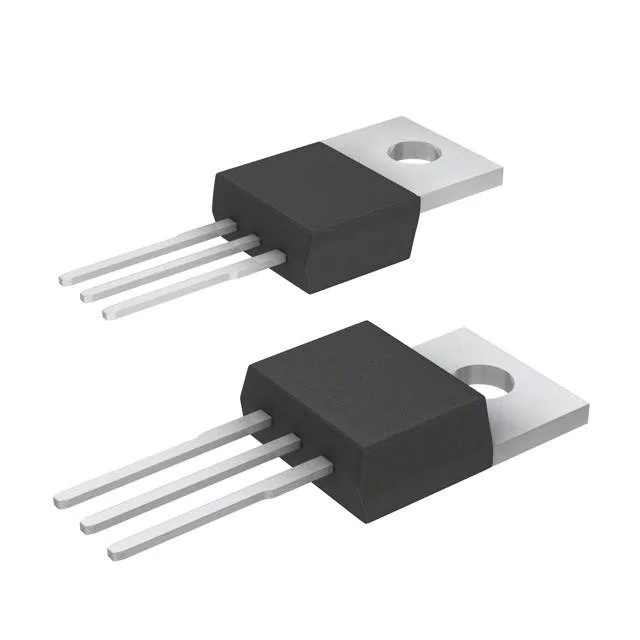
The PG-TO220-3 package is a standard through-hole TO-220 with three leads. The tab is the drain. Through-hole mounting simplifies manual assembly and rework in prototype runs, but the larger footprint versus a D²PAK or LFPAK means the PCB layout must allocate space for the heatsink clip or screw boss.
Gate drive thresholds — 6 V and 10 V
The drive voltage range for achieving rated Rds(on) is 6 V minimum, 10 V recommended. The threshold voltage is 3.3 V maximum at 50 µA drain current. A 10 V gate supply or a bootstrap charge-pump is the correct choice for full performance.